
Antrim County Circuit Court Overview
The Circuit Court is the top trial court in Michigan. Antrim County shares its bench with Grand Traverse and Leelanau counties inside the 13th Circuit. This tri-county setup means one circuit staff and one records system reach across all three counties, though each county keeps its own case files. The county seat courthouse in Bellaire is the local home for Antrim County matters.
Circuit judges handle the cases with the highest stakes. Those include felony charges, divorce and custody, and civil lawsuits that run above the district court limit. The court also reviews appeals and transfers that arrive from the lower court. The 13th Circuit Court page describes that jurisdiction and the counties it covers.
Records for these cases sit with the county clerk, who serves as clerk of the criminal, civil, and family divisions. That makes the clerk the public entry point for most circuit files. Note: the 13th Circuit is a general-jurisdiction court, so it can hear almost any case type that state law does not send to another court.
Antrim County Trial Courts and Contacts
Three trial courts serve Antrim County residents, and all three sit in the historic courthouse block in downtown Bellaire. The Circuit Court takes the largest matters, the district court takes the smaller ones, and the probate division handles estates and family cases. The table below lists each court with its address, phone, and the work it does.
| Court | Address | Phone | What It Handles |
|---|---|---|---|
| 13th Circuit Court (Antrim location) | 205 E Cayuga St, Bellaire, MI 49615 | 231-533-6353 records; 231-922-4701 admin | Felonies, larger civil suits, divorce and family, appeals from district court |
| 86th District Court | 205 E Cayuga St, Bellaire, MI 49615 | 231-533-6441 | Misdemeanors, traffic, civil infractions, small claims |
| Probate Court and Family Division | 205 E Cayuga St, PO Box 130, Bellaire, MI 49615 | 231-533-6681 | Estates, guardianships, conservatorships, name changes, family division |
The circuit administration office in Traverse City coordinates the tri-county bench, while the Bellaire records desk answers Antrim County case questions. The 86th District Court contact page shows how the lower court publishes its own phone and address details.

That contact page is the quickest way to confirm a district court phone line before you call about a traffic ticket or misdemeanor case. Circuit questions, by contrast, route through the county clerk's records office on Cayuga Street.
What the Antrim County Circuit Court Handles
The Circuit Court carries the heaviest docket in the county. Its work falls into a few clear buckets, and each one leads to a different kind of public record. Felony files, divorce judgments, and large civil verdicts all live here rather than in the district court.
- Felony criminal cases, from arraignment through sentencing
- Larger civil lawsuits and higher-dollar money claims
- Divorce, custody, child support, and paternity
- Personal protection order matters and other family disputes
- Appeals and case removals sent up from the district court
A personal protection order, often called a PPO, is a civil order that limits contact between two people. Those files are handled with extra care, and the county's public civil portal no longer lists them because federal law blocks online disclosure that could reveal a petitioner. Divorce cases, on the other hand, stay searchable in the same civil system.
The 86th District Court in Antrim County
The 86th District Court is the lower trial court for Antrim County. It shares the same tri-county footprint as the Circuit Court and handles the high-volume cases most residents ever see. Traffic tickets, civil infractions, and misdemeanor charges all start here. Small claims and landlord-tenant disputes also run through this court.
The 86th District Court overview page explains how the court is organized across the three counties.

That overview shows the split between the court's divisions and the kinds of cases it takes in. When a district case turns serious, or when a party wants to appeal a district ruling, the matter can move up to the Circuit Court. That is how the two courts connect in daily practice.
Small claims cases give people a low-cost way to settle disputes without a lawyer. The district court also holds the lower-dollar civil suits, while the larger civil cases move up to the Circuit Court. Note: felony cases often open in the district court for a first hearing, then bind over to the Circuit Court for trial.
Criminal Cases in Antrim County District Court
The district court runs a busy criminal division. Misdemeanor charges, drunk-driving cases, and local ordinance violations move through this division before any felony matter climbs to the Circuit Court. The prosecutor files the charges, and the court schedules arraignment, pretrial, and any plea or trial dates.
The tri-county 86th District criminal division page outlines how those cases are processed and which dockets they touch.
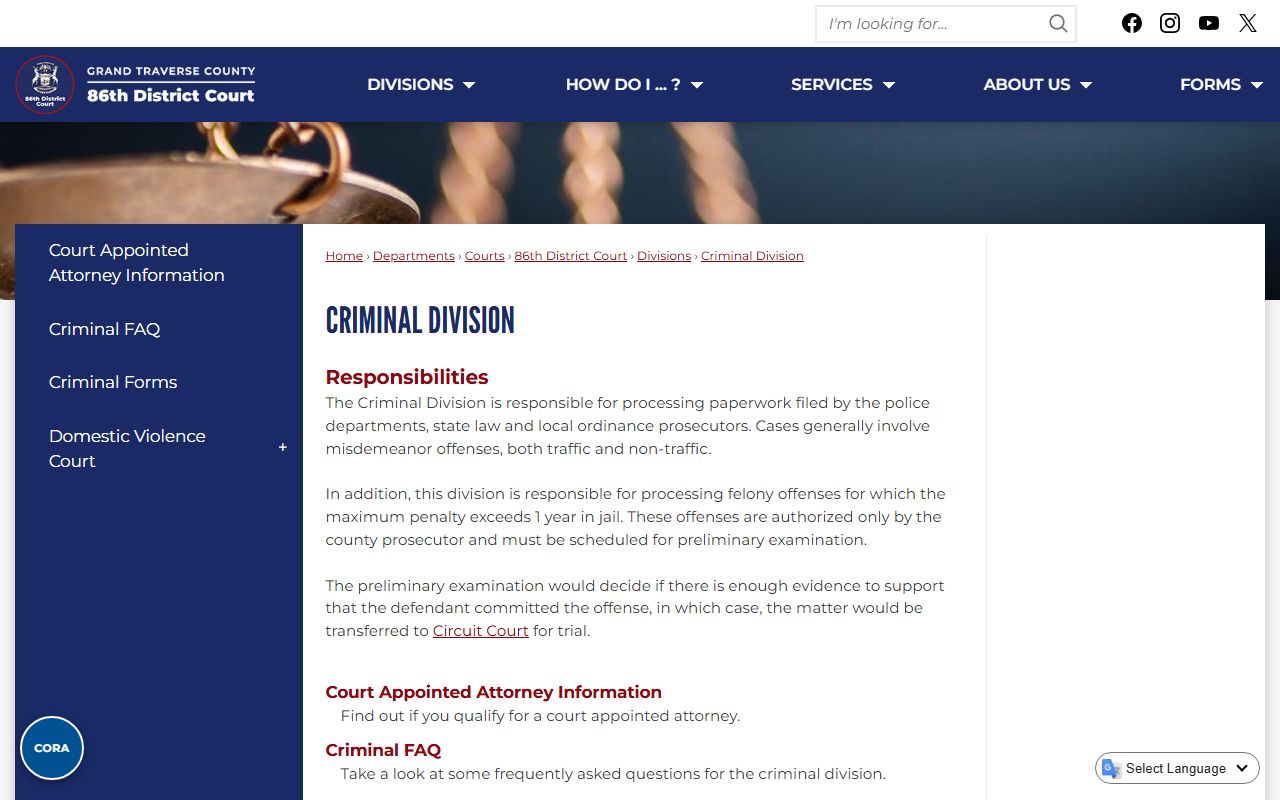
The criminal division page also notes the special dockets tied to domestic violence charges. Many of these cases stay in the district court, but a serious felony is sent up on a bind-over order. Once the Circuit Court takes the felony, the case shows up in the circuit criminal records system rather than the district files.
Circuit Court vs District Court vs Probate Court
Michigan uses three trial courts, and each one owns a different slice of the caseload. The Circuit Court takes the big matters, the district court takes the smaller ones, and the probate division takes estates and guardianships. The comparison below sorts the main differences so you can tell which court holds a given record.
| Circuit Court | District Court | Probate Court | |
|---|---|---|---|
| Civil Cases | Larger civil suits | Lower-dollar suits and small claims | Estates, trusts, guardianships |
| Criminal Cases | Felonies | Misdemeanors, traffic, civil infractions | None; juvenile runs through family division |
| Family Matters | Divorce, custody, support, PPOs | Landlord-tenant, small claims | Guardianship, conservatorship, adoption, name change |
| Appeals | Hears appeals from district court | Appeals go up to circuit court | Appeals go to the Court of Appeals |
The family division sits inside the probate court in Antrim County, so juvenile and adoption files run through that office. This layout matters because a person searching for a divorce looks in the Circuit Court, while a person searching for a guardianship looks in probate. Getting the venue right saves a wasted trip or call.
How a Case Moves Through the Antrim County System
Cases do not stay in one court forever. A dispute can start low and climb as it grows or gets appealed. The flow below shows the two main paths a case can follow through the Antrim County and Michigan court system.
Trial and appeal path: District Court › Circuit Court › Court of Appeals › Michigan Supreme Court
Probate path: Probate Court › Court of Appeals
A traffic or misdemeanor case usually ends in the district court. A felony or a big civil suit is decided in the Circuit Court. If a party loses and wants review, the case goes to the Michigan Court of Appeals, and then possibly the Michigan Supreme Court. Probate rulings skip the Circuit Court and appeal straight to the Court of Appeals. Note: most cases end at the trial level, since only a small share of rulings are ever appealed.
Antrim County Probate Court and Family Division
Probate is its own venue in Antrim County. The Probate Court and Family Division handles estates, guardianships, conservatorships, adoptions, name changes, and juvenile matters. It sits in the historic courthouse in downtown Bellaire and keeps its own hours and forms. The probate and family court page lists the judge, the mailing address, and the court's document center.
Antrim County Probate Court and Family Division
205 E Cayuga St, PO Box 130
Bellaire, MI 49615
231-533-6681
Judge Stacey L. Truesdell presides
Because the family division lives inside probate, juvenile and adoption files carry stronger privacy rules than an adult felony or divorce case. Many of these records are limited or closed to the public. A guardianship or small-estate matter, though, is generally open once it is filed, and the court's document center offers the forms a filer needs.
Court Hours and Holidays in Antrim County
The courts keep standard weekday hours and close for state holidays. Knowing the schedule helps if you plan to file a paper, pay a fee, or pull a record in person. The probate and family division also closes for a short midday break each day.
| Office | Hours |
|---|---|
| Probate Court and Family Division | Monday to Friday, 8:30 a.m. to 4:30 p.m., closed 12:00 to 12:30 p.m. |
| Clerk of Court records office | Monday to Friday, 8:30 a.m. to 5:00 p.m. |
The tri-county court hours and holidays page lists the days the courts shut down.
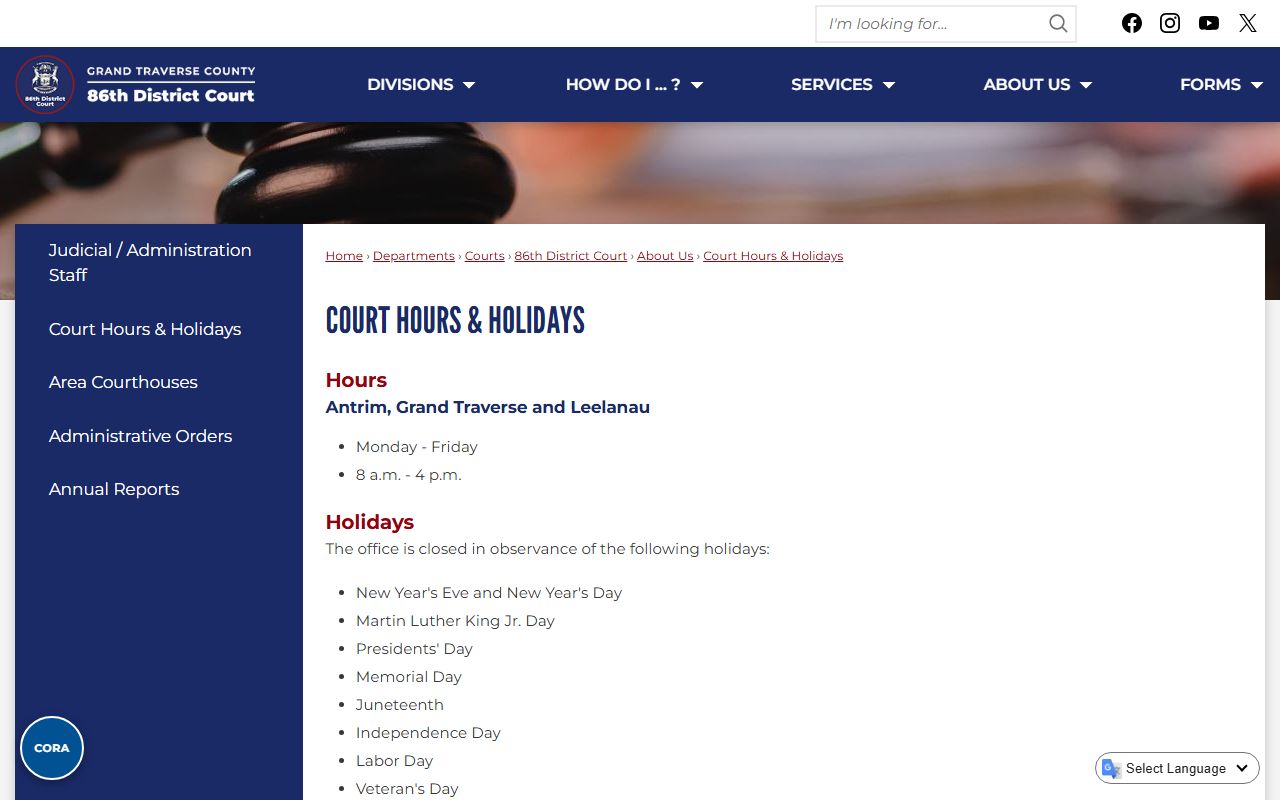
That schedule page is worth a quick check before a courthouse visit, since a holiday closure can stall a filing deadline. When the counter is closed, the online case portals still work around the clock for basic searches.
Specialty Courts in Antrim County
The tri-county courts run several problem-solving dockets that work alongside the regular Circuit and district benches. These programs give eligible people treatment and supervision instead of jail. They tie closely to the criminal division and the probation office.
- Sobriety Court, a recovery docket for repeat drunk-driving offenders started in 2001 under Judge Michael S. Stepka
- Domestic Violence Court, a fast-track docket for misdemeanor domestic violence charges led by Judge Robert A. Cooney
- Mental Health Court, a jail alternative for defendants with mental illness begun in 2009
- Drug Treatment Court, aimed at felony drug convictions and launched in 2016
The Sobriety Court page and the Domestic Violence Court page describe how each docket works and who qualifies.
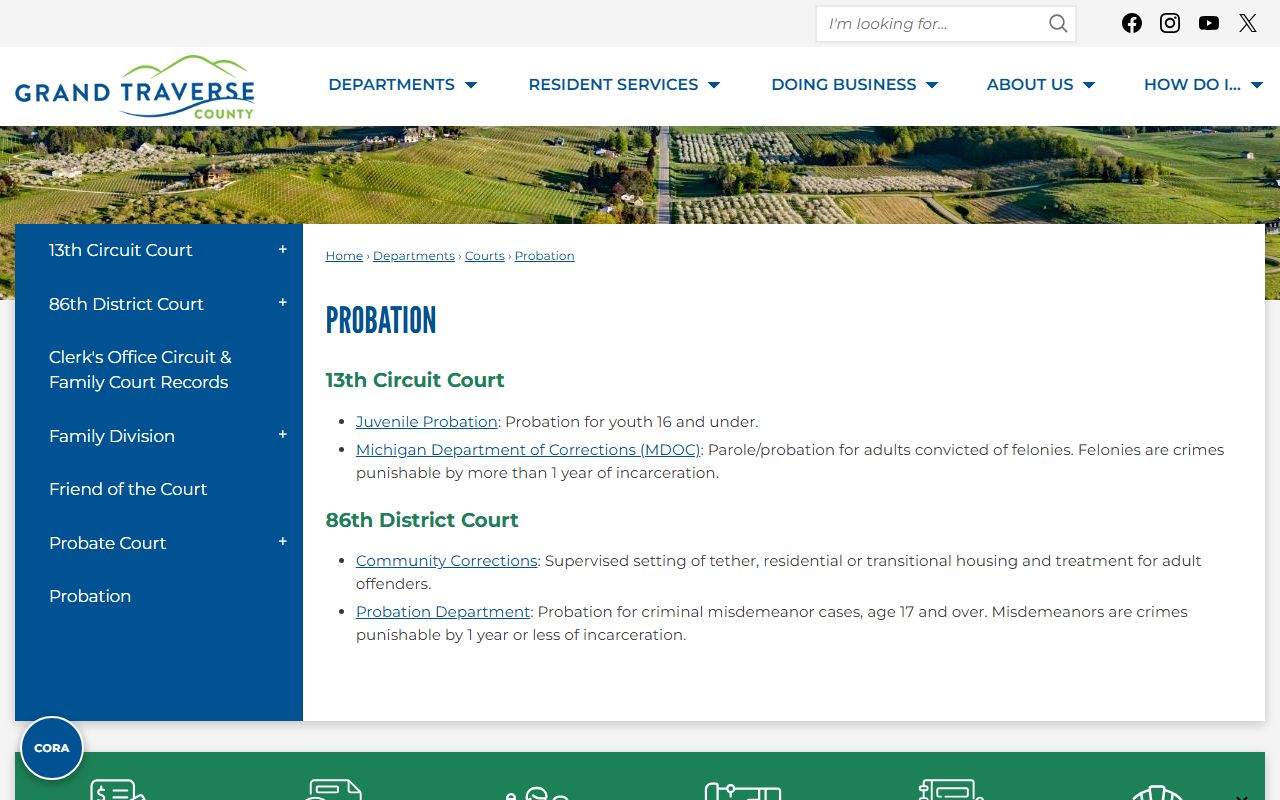
That probation page shows how supervision staff support the specialty dockets in Antrim County. Domestic violence officers, for example, work closely with offenders on the fast-track docket. Each program aims to cut repeat offenses rather than simply move a case off the calendar.
Probation in Antrim County Courts
Probation lets a person serve a sentence in the community under supervision instead of behind bars. Both the Circuit Court and the district court can order it. Officers monitor conditions such as testing, counseling, and check-ins, and they report back to the judge.
The tri-county probation department page covers staffing and the services that support Antrim County cases.
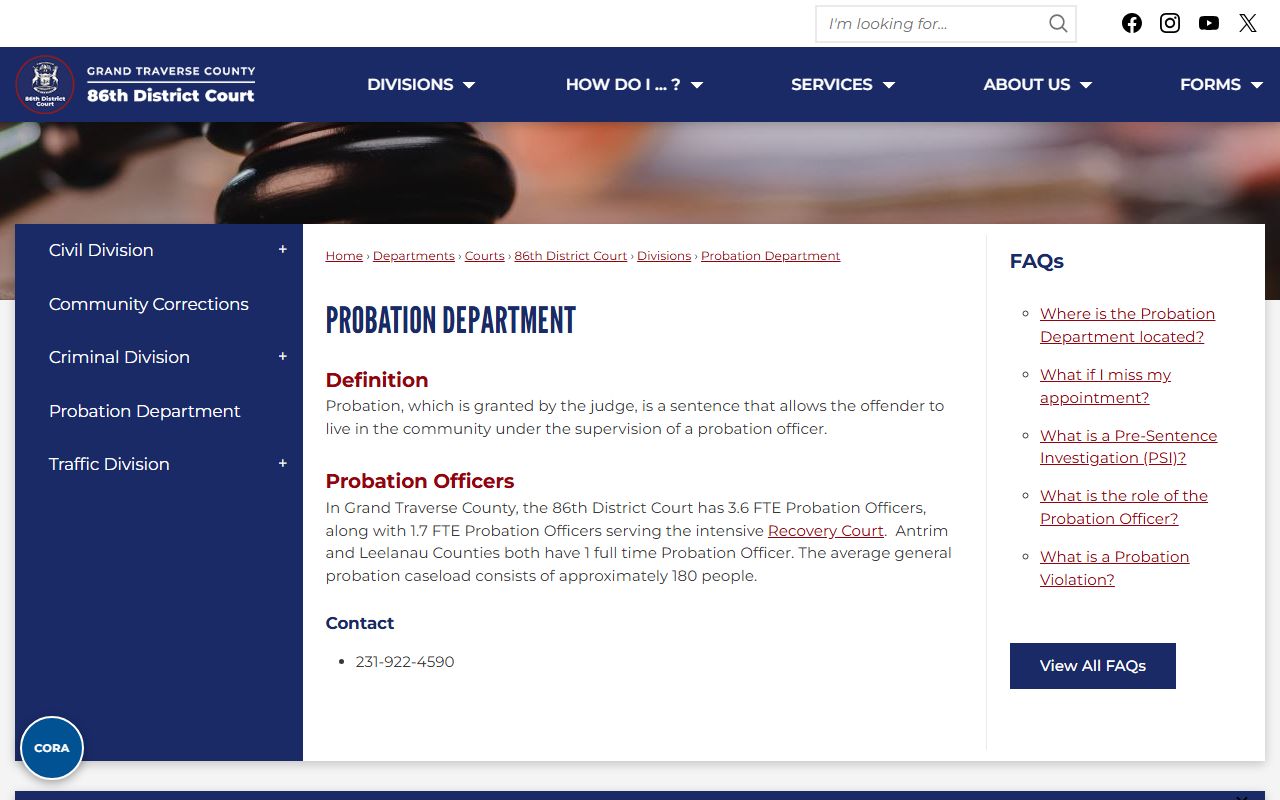
Probation records tie back into the court file, so a violation can bring a person back before the judge. A missed probation term is one common reason a bench warrant is issued. That is why the probation office and the criminal division stay in close contact throughout a case.
Searching Antrim County Circuit Court Records
The 13th Circuit runs two free public search systems, one for civil cases and one for felonies. Both cover Antrim, Grand Traverse, and Leelanau counties, so a county dropdown keeps the results local. You can search by party name or by case number. The steps below walk through a typical search.
- Decide if the case is circuit or district, and civil or criminal.
- For circuit civil cases, open the 13th Circuit civil portal and search by party name or case number.
- For felonies, use the 13th Circuit criminal portal and search by defendant name.
- Pick Antrim from the county dropdown when the system asks for one.
- For traffic and misdemeanors, use the 86th District Court case links.
- Open the result to view the judge, filing date, status, and docket entries.
- For older files outside the online range, call or visit the clerk's records office.
The civil system reaches back to the mid-1980s for full case detail, and the criminal system lists cases filed from 1981 forward. Files older than that may sit on microfilm at the records office. For a wider look across every record type, the county's court records guide covers the other search channels. The Clerk of Court office remains the best contact for certified copies and files that predate the online index.
Appeals and Federal Courts for Antrim County
A losing party in the Circuit Court or the probate court can ask a higher court to review the ruling. In Michigan that means the intermediate appellate court first, then the state high court. Antrim County falls in a set appellate district for that review.
The Michigan Court of Appeals hears appeals from final circuit and probate orders, and Antrim County sits in the Fourth District under the court's election district map. Above that court, the Michigan Supreme Court is the last stop in the state system, and it takes only a small number of the cases that seek its review.
Some cases never touch state court at all. Federal matters for the county are heard in the U.S. District Court for the Western District of Michigan, and Antrim County is filed in that court's Southern Division. Federal appeals then go to the Sixth Circuit. Note: state and federal courts run on separate tracks, so a case belongs to one system or the other, not both at once.