
Antrim County Arrest Records and Court Charges
An Antrim County arrest record documents the arrest itself. It notes who made the arrest, when it happened, the arresting agency, and the booking that follows. That record lives with the sheriff and the jail, not the courts. It is a snapshot of custody, not a finding of guilt. Being arrested does not mean a person has been charged, and it certainly does not mean the person has been convicted. Local police and the sheriff make arrests. What happens next is up to the prosecutor.
The court charge record is a different animal. Once someone is arrested, the county prosecutor reviews the case and decides the formal charges. Those charges are filed with the court, and from that point they are tracked through the case as court charges after arrest. For the booking and custody side, the jail roster and inmate detail live on the Antrim County inmate records page. The full case file, pleas, and final outcome sit on the Antrim County criminal court records page. The charge record is the bridge between the two.
Antrim County sits inside the 13th Circuit Court district and the 86th District Court district. Felony charges route to circuit court. Misdemeanor and traffic charges stay in district court. The sheriff office, which handles the arrest and booking side, publishes its public service links online.
The sheriff office page shows the arrest and custody side of the record, which is where an arrest first enters the system before charges are filed. Readers can review the sheriff's public service links at the Antrim County Sheriff home page.
That page is the arrest-side anchor. It routes the public to the office that logs the arrest, while the charge record itself moves on to the prosecutor and the court clerk.
How to Find Antrim County Arrest Records and Charges
Charges and their status show up in the court case search, not in a booking blotter. Felony charges are searchable through the 13th Circuit criminal records system, which covers Antrim, Grand Traverse, and Leelanau counties and is free to use. Misdemeanor and traffic charges route through the 86th District Court case links. The first task is to decide whether the charge is a felony or a lower-level matter, because that decides which portal holds it.
- Open the 13th Circuit criminal records search for felony charges, or the county court-cases links for district-level matters.
- Search by defendant name, or by case number and county if you already have them.
- Open the case result and read the charge list on the detail page.
- Check each charge for its statute code, degree, plea, and current status.
The criminal database reaches back to cases filed in 1981. Older charges without an electronic index may only exist on microfilm at the records office. The county also links both portals from its online services page, which is a useful starting point when you are not sure which court holds a case.
Note: The circuit criminal portal covers felonies only, so a misdemeanor charge tied to the same arrest is checked separately through the district court case links.
How Charges Get Filed After an Arrest: Complaint, Information, and Indictment
The charge record does not start at the arrest. It starts when a charging document is filed. After booking, the prosecutor reviews the police report and decides what to charge. In Michigan, most cases begin with a complaint and a warrant. Felony cases then move forward on an information after a preliminary examination, when the district court finds enough evidence to send the case up. A grand jury indictment is allowed under Michigan law but is used far less often than the complaint and information route.
| Complaint | Information | Indictment | |
|---|---|---|---|
| Filed By | Officer or prosecutor | Prosecutor | Grand jury |
| Common For | Misdemeanors and first filings | Felonies after bind over | Rare in Michigan |
| What It Does | Starts the case and states the accusation | Formally charges a felony for trial | Charges after a grand jury review |
On a real Antrim County criminal file, the felony information shows up in the docket log as an FI entry, and a bind over from district court to circuit court shows up as a CB entry. Those two codes track the arrest-to-charges path in plain view once you open the case detail page.
Who Files Charges After an Antrim County Arrest
The Antrim County Prosecuting Attorney decides and files the charges. The current prosecutor is Wilson Brott. His office handles criminal charging, plea negotiations, and victim communication for county cases. The office also works with the state victim notification service linked from the county homepage. The prosecutor is the reason an arrest becomes a formal charge, and the reason a charge can later be amended, reduced, or dropped. Contact details for the office appear at the county prosecutor page.
The sheriff sits on the other side of the process. Sheriff deputies make many of the arrests and run the jail where booking happens, but they do not decide charges. The sheriff office also serves civil process and legal papers, which readers sometimes confuse with criminal charging. Those two functions are separate.
The sheriff's civil process work is documented in detail, and it helps show where the sheriff's role ends and the prosecutor's charging role begins. The service types and rules appear on the sheriff civil process page.
Civil process is a court-ordered service duty, not a charging power. It underlines a simple point: the sheriff moves paper and holds people, while the prosecutor files the charges that the court then tracks.
Charge Status in Antrim County Court Records
Charges are not fixed once they are filed. A prosecutor may add a count, amend the wording, reduce a felony to a misdemeanor, or drop a charge entirely. A judge may dismiss a count. Each of these moves changes the charge status you see on the case detail page. Reading that status correctly is the difference between thinking someone was convicted and knowing a charge was thrown out.
| Status | What It Means |
|---|---|
| Pending | The charge is filed and the case is still open, with no final result yet. |
| Amended or Reduced | The charge was changed, often lowered from a felony to a lesser offense. |
| Bound Over | The district court found enough evidence to send the felony charge to circuit court. |
| Dismissed | The court threw the charge out, sometimes with prejudice so it cannot be refiled. |
| Nolle Prosequi | The prosecutor formally chose not to pursue the charge any further. |
A dismissal can be with prejudice, meaning the charge is closed for good, or without prejudice, meaning it may come back. Nolle prosequi is a prosecutor's decision, while a dismissal is usually the court's. The county case detail page also shows whether a plea was entered and whether a count ended in conviction.
Note: A charge marked dismissed or nolle prosequi is not a conviction, so treat the two as separate facts when reading any Antrim County charge record.
Antrim County Charge Codes and Severity Levels
Every charge ties back to a Michigan statute, and the case file spells out the code, the degree, and a short description of the offense. On the circuit criminal detail page, the offense table lists the count, plea, conviction, offense statute, suffix, description, degree, and any associated charge. Case-type codes make the severity clear at a glance. A code like FC marks a felony or capital case, and FH marks another felony class. That coding is how one arrest can turn into several separate charges on the same case number.
Severity in Michigan runs across three broad levels, and each carries a different weight in the record. A single incident can produce a mix of all three.
- Felony: a serious crime usually punishable by more than one year, handled in circuit court.
- Misdemeanor: a lesser crime usually capped at up to one year, handled in district court.
- Civil infraction: a non-criminal traffic or ordinance violation with no jail exposure.
Because one arrest can generate multiple counts, the record may show a felony and a misdemeanor from the same night. Each count carries its own plea and its own outcome, so the case is not resolved until every count has a disposition.
Charges vs. Convictions
Being charged is an accusation. A conviction is a result. That gap matters most when a reader assumes a charge alone tells the whole story. A charge only needs probable cause to be filed. A conviction requires proof beyond a reasonable doubt, or a guilty plea, before the court records it.
| Charge | Conviction | |
|---|---|---|
| Stage | Accusation filed | Verdict or plea entered |
| Burden of Proof | Probable cause | Beyond a reasonable doubt |
| Public Record | Yes | Yes |
| Meaning | The case is open | The court found the person guilty |
A person can face several charges and be convicted of none. The county criminal detail page separates the offense and plea columns from the proceedings log for exactly this reason. It lets a reader see the charge as filed and then follow it to the final disposition without guessing.
Antrim County Sheriff Records Channels
Some arrest-side records never appear in the court case search. Booking detail, incident reports, and crash reports stay with the sheriff, and the way to get them is a public records request rather than a portal lookup. The sheriff office maintains its own request channels and its own records coordinator, separate from the county clerk and the courts.
When the record you want is an arrest report or booking document that is not posted online, the sheriff Freedom of Information Act process is the route. Requests can go by email, mail, fax, or hand delivery, and the request form is on the sheriff FOIA request page.
That form is the fallback when an arrest record is not part of the public case file yet. It puts the request in front of the office that actually holds the booking paperwork.
Crash reports work the same way. A traffic arrest often produces both a criminal charge and a separate crash report, and the report is requested from the sheriff, not the court. Submission methods for those reports are listed on the sheriff crash reports page.
Pulling the crash report alongside the charge record gives a fuller picture of an incident, since the report carries the officer's account while the court file carries the charge and its outcome.
Note: The sheriff FOIA route is the county's clearest way to reach an arrest or booking record that has not yet surfaced in the public court case search.
Statewide Charge and Criminal History Lookups
County portals only show county cases. When a charge or a criminal history reaches beyond Antrim County, the search moves to statewide tools run by the state. These cover sentenced offenders, criminal-history background checks, and the public sex offender registry. Each answers a different question, and none of them replaces the county court file for a local case.
The Michigan Department of Corrections runs the Offender Tracking Information System for people sentenced to state supervision. It is the state-level view of what happened after serious charges led to a prison or parole outcome. The tool is reached through the state OTIS offender search page.
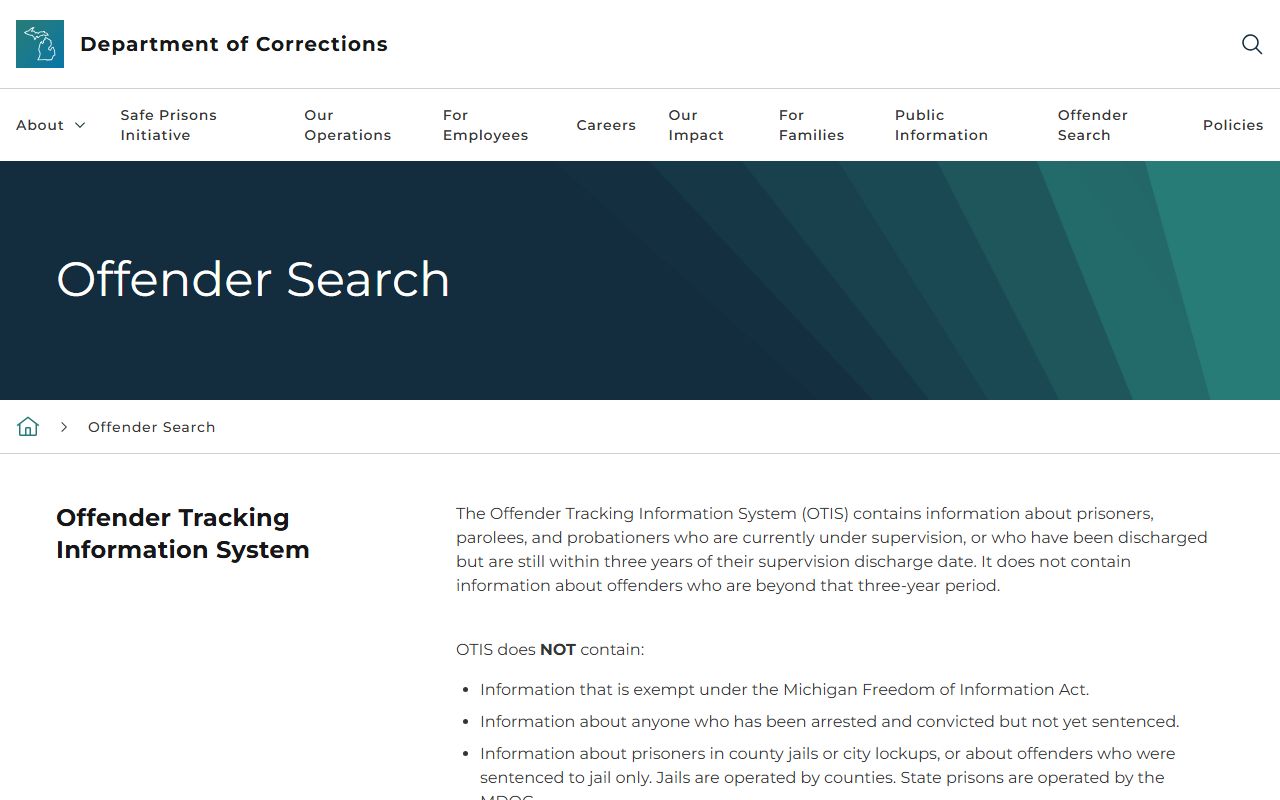
OTIS is where a felony charge can be traced to its state-level result. For a formal criminal-history background check, the Michigan State Police runs the Internet Criminal History Access Tool, a public search available at Michigan ICHAT for a set fee. Antrim County courts themselves use ICHAT and LEIN to verify criminal history on certain filings, such as name-change petitions.
The state also publishes the public sex offender registry, which lists registrants and their charge history. The registry and its search fields are on the Michigan State Police sex offender registry page.
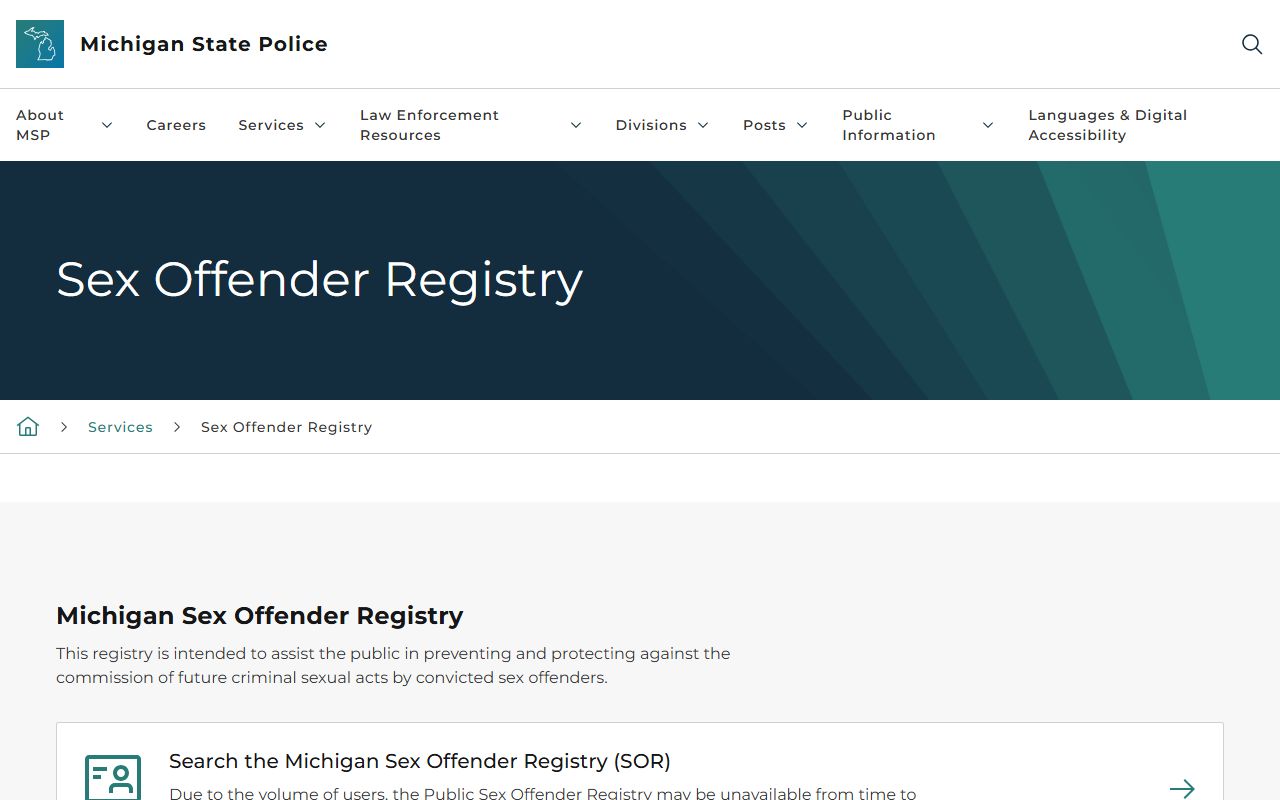
The registry is a narrow slice of charge history built around specific convictions. It complements the county court file rather than replacing it, since it only covers registrable offenses.
Sealed vs. Expunged Records
Not every charge stays public forever. Michigan law lets certain convictions be set aside, and court rules let some documents be sealed. The two are not the same. A sealed record is hidden from public view by court order, while an expunged conviction is set aside so it is treated, for most purposes, as though it never happened. Michigan's main relief statute governs how eligible convictions are set aside.
| Sealed | Expunged | |
|---|---|---|
| Visibility | Hidden from public view by order | Set aside and treated as never existed |
| Law Enforcement | Limited access remains | Very limited access remains |
| Eligibility | Specific documents, PPO petitioner data, protected identifiers | Eligible convictions under Michigan set-aside law |
Setting aside a conviction runs through a petition process. A person confirms eligibility, checks the waiting period and any conviction-count limits, files the petition with the correct court, submits fingerprints, and attends a hearing if the court sets one. When relief is granted under the Michigan expungement statute, public access to the record changes at the source.
Note: A set-aside conviction is not the same as a public open conviction, so an expunged charge should not appear in ordinary Antrim County public searches once relief is granted.
Background Checks and Antrim County Charge Records
There is a difference between a casual charge lookup and a formal background check. A county case search or a state ICHAT query answers a personal question. A background check used to make a hiring, housing, or credit decision falls under the federal Fair Credit Reporting Act and must run through a regulated consumer reporting agency. The public court portals and state tools are for information, not for regulated screening.
Michigan's public records framework, anchored by the state Freedom of Information Act, sets what county offices must release and what they may withhold. Court files stay public unless a rule or order protects them, and protected personal identifiers are redacted before release.
Important: This site is not a consumer reporting agency under the FCRA, and its information may not be used for employment, tenant, credit, or insurance decisions.
Restricted Charge Records in Antrim County
Some charge records are simply not open to the public. Michigan court rules and statutes wall off whole categories, and the county follows those limits on its public portals. The clearest local example is the civil circuit portal, which no longer lists personal protection order cases because federal law blocks online disclosure that could reveal a petitioner's identity or location.
Several other categories carry access limits. Juvenile charges are largely closed under Michigan's juvenile records law. Adoption and some mental-health matters are confidential. Sealed and expunged records are removed from public view. Even in an open case, protected personal identifiers are redacted before the file is shown.
- Juvenile delinquency and status-offense charges, restricted under state law.
- Sealed documents hidden by court order within an otherwise open case.
- Expunged convictions that have been set aside.
- Personal protection order matters excluded from the public civil portal.
Juvenile confidentiality is set by the Michigan juvenile records statute, which is why a juvenile charge rarely shows up in a routine public search. When a record is closed, the fallback is a direct request to the court or the county Freedom of Information Act process, which may still be denied when a statute protects the file.