
Active Warrants in Antrim County
Warrants in Antrim County are issued by judges and magistrates of the 86th District Court and the 13th Circuit Court. A judge signs a warrant when there is legal cause to arrest a person or to search a place. The county sheriff and local police then carry out those orders. The Antrim County Sheriff's Office in Bellaire is the main agency that holds and serves active warrants across the county.
The county does not publish a public active-warrant list online. No warrant board was found on the county site or the shared 13th Circuit court system used by three counties. That does not mean warrants do not exist. It means the public has to use other channels to confirm one. Those channels include the sheriff's office, the two court case systems, and a formal public records request. Each channel covers a different slice of warrant activity, so the right starting point depends on what you already know.
Most warrant data stays with the issuing court and the sheriff until an arrest is made. The record becomes easier to view once a case is filed and moves into the public docket.
Note: A warrant can stay active for years, so an old missed court date in Antrim County may still be open even after a long gap.
Types of Warrants in Antrim County
Warrants fall into a few common types, and each one starts for a different reason. Some come from a missed court date. Others come from a criminal charge or a judge's order during a case. Knowing the type helps you find the right office and the right fix.
- Bench warrant - issued by a judge when someone misses a court date, skips probation, or is held in contempt.
- Arrest warrant - issued on probable cause that a person committed a crime, often after a police complaint.
- Felony warrant - tied to serious charges that move into the 13th Circuit Court after an arrest or bind-over.
- Search warrant - signed by a judge to let officers search a home, vehicle, or other place for evidence.
Bench warrants are the type most residents run into. A missed traffic date or an unpaid fine can trigger one long after the original case seemed to fade. Felony warrants are far less common but carry the highest stakes.
How to Check for an Antrim County Warrant
Because the county keeps no public warrant list, checking for an Antrim County warrant means working through a short chain of offices. The order matters. Start with the sheriff, move to the court case systems, then fall back to a formal records request if the first two do not answer the question.
A simple way to picture the path is this: Sheriff's office, then District or Circuit court case lookup, then a county records request. The sheriff handles active enforcement. The courts show the case behind a warrant. The records request forces a written answer when nothing else is public. Each of these channels serves a different need, from reporting a wanted person to confirming your own status.
Sheriff Anonymous Tip Form
The clearest public lead channel is the sheriff's anonymous tip form. It is built for possible crimes, planned crimes, law violations, and other safety or security concerns. When a reader has information about a wanted person, the form sends it straight to the sheriff's office. The office says it will not know who you are if you submit anonymously.
The county's Submit a Tip page shows the exact fields the form uses.
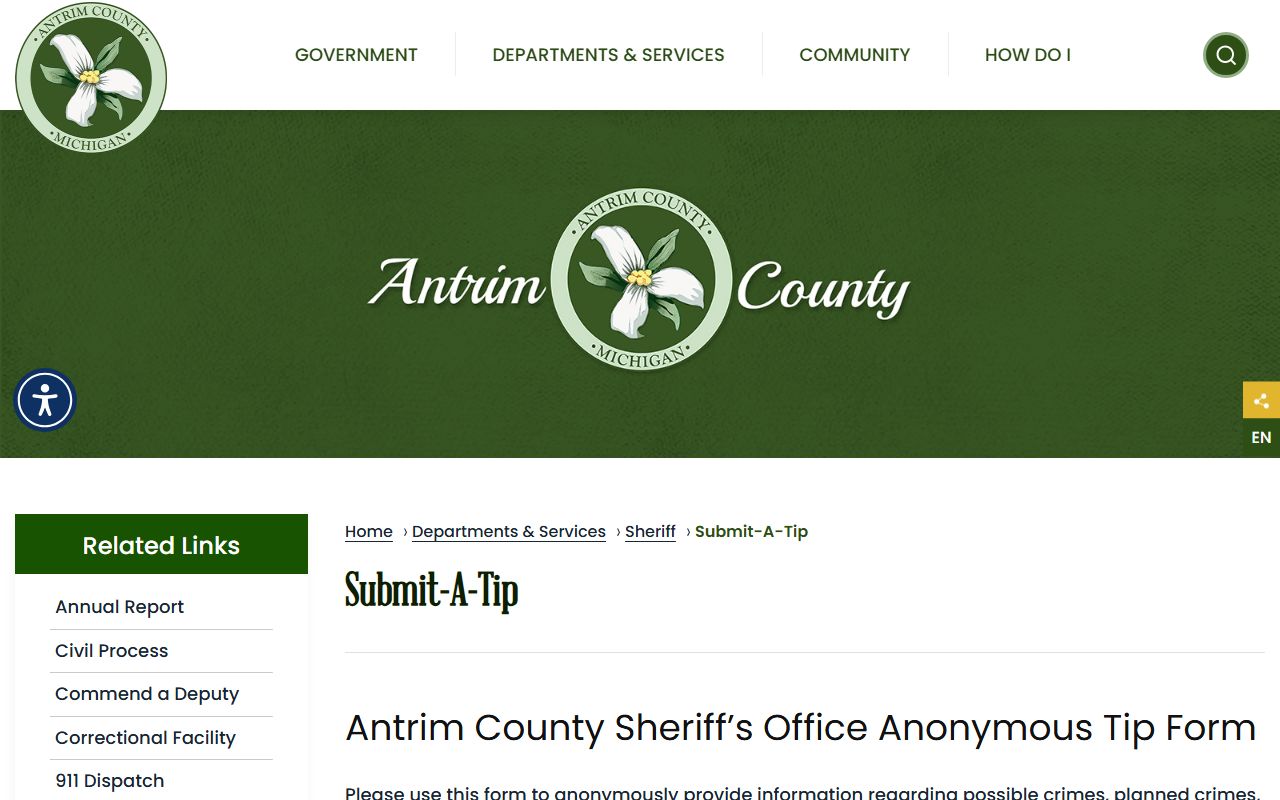
The tip form pairs short prompt fields with open text areas, so a reporter can explain what happened, when it happened, and who was involved. It is not a warrant search. It is a way to give the sheriff a lead. If you want a reply, you can add your name and contact details, though the anonymous option stays open. The table below lists every field on the form.
| Field | Type | Required | Notes |
|---|---|---|---|
| Describe the nature of the incident | Text | Yes | Preset prompt text in the input |
| Description | Text area | Yes | Open description field |
| When and where did this occur | Text | Yes | Prompt text in the input |
| Description | Text area | Yes | Open description field |
| Describe the person or persons responsible | Text | Yes | Prompt text in the input |
| Description | Text area | Yes | Open description field |
| Optional: your name and contact information | Text | No | Anonymous mode still allowed |
| Contact details | Text area | No | Follow-up contact details |
| File upload | File | No | Photos or videos can be attached |
| Submit | Button | Yes | Sends directly to the sheriff's office |
FOIA and Phone Routes for Antrim County Warrants
When a tip is not what you need, the sheriff's office also takes direct questions and formal records requests. A phone call to the office is the fastest way to ask whether a warrant is on file. For a written answer, the sheriff accepts a Freedom of Information Act request through the county process.
The sheriff runs a FOIA request page for records that are not posted online. County records fall under Michigan's Freedom of Information Act at MCL 15.231, which gives the public a right to inspect records unless an exemption applies. Warrant details tied to an open investigation may be withheld, but the request still creates a formal record of the ask and a written reply.
You can also visit in person. The sheriff's lobby vestibule stays open around the clock under surveillance, and the office keeps regular weekday hours.
Antrim County Sheriff's Office
209 Portage Dr Suite A
Bellaire, MI 49615
231-533-8627
Monday to Friday, 8:00 AM to 4:00 PM; lobby vestibule open 24 hours
Court Case Lookups for Antrim County Warrants
A warrant almost always sits behind a court case, so the court systems can confirm the case even when the warrant itself is not posted. Bench warrants for missed court dates usually come from the 86th District Court, which handles misdemeanors, traffic, and civil infractions for the county. The county's court cases page links the district lookup tools, and the 86th District Court page explains what the office covers.
Felony matters move to the 13th Circuit Court after an arrest or bind-over. The 13th Circuit criminal case search covers Antrim, Grand Traverse, and Leelanau counties and is free to use. A felony case that follows a warrant will show the charge, the judge, and the case status once it is filed. The full case file, pleas, and sentencing live in the Antrim County criminal court records.
Statewide, the Michigan courts run a case search for appellate matters and some trial data. Once a person has been arrested on a warrant, the jail side of the story shows up through the county inmate records rather than the warrant itself.
Note: The 86th District Court and 13th Circuit Court share one records system with Grand Traverse and Leelanau, so a case number search may span all three counties at once.
What an Antrim County Warrant Record Shows
When a warrant does surface in a case file or a records response, it carries a standard set of fields. These fields tell you who the warrant names, why it was issued, and what it will take to clear it. The bond amount and the status matter most for anyone trying to resolve one.
| Field | What It Shows |
|---|---|
| Subject Name | The person the warrant names, sometimes with aliases and a birth date. |
| Warrant Type | Bench, arrest, felony, or search, which signals how it started. |
| Issuing Court | The 86th District Court or the 13th Circuit Court that signed the order. |
| Case or Complaint Number | The file number that ties the warrant to a court case. |
| Issue Date | The date the judge signed the warrant. |
| Underlying Charge | The offense or court failure that led to the warrant. |
| Bond Amount | The money required for release, if the court set one. |
| Status | Whether the warrant is active, served, recalled, or cleared. |
What to Do If You Have an Antrim County Warrant
Finding out that you have a warrant is stressful, but the worst move is to ignore it. An open warrant does not expire on its own. A routine traffic stop can turn into an arrest. A planned response almost always goes better than a surprise one.
- Confirm the warrant by calling the sheriff's office or checking the court case for your name.
- Note the issuing court and the case number so you know which office to work with.
- Talk to a lawyer before you act, especially for a felony warrant or a probation issue.
- Ask the court about clearing a bench warrant, since some can be resolved by posting bond or setting a new date.
- Arrange a voluntary surrender through counsel if the warrant requires an arrest.
- Bring identification and any bond money the court sets.
Important: Talk to a lawyer before you turn yourself in, since a felony or probation warrant can carry consequences that a quick surrender will not fix on its own.
Federal Warrants and Fugitive Cases
Some Antrim County cases cross into the federal system. A federal charge is prosecuted in the U.S. District Court for the Western District of Michigan, and Antrim County sits in that district's Southern Division. Federal warrants and fugitive arrests are handled by the U.S. Marshals Service, not the county sheriff.
The U.S. Marshals for the Western District of Michigan lead fugitive investigations and serve federal warrants across the region. The federal charges themselves come from the U.S. Attorney's Office for the Western District of Michigan.
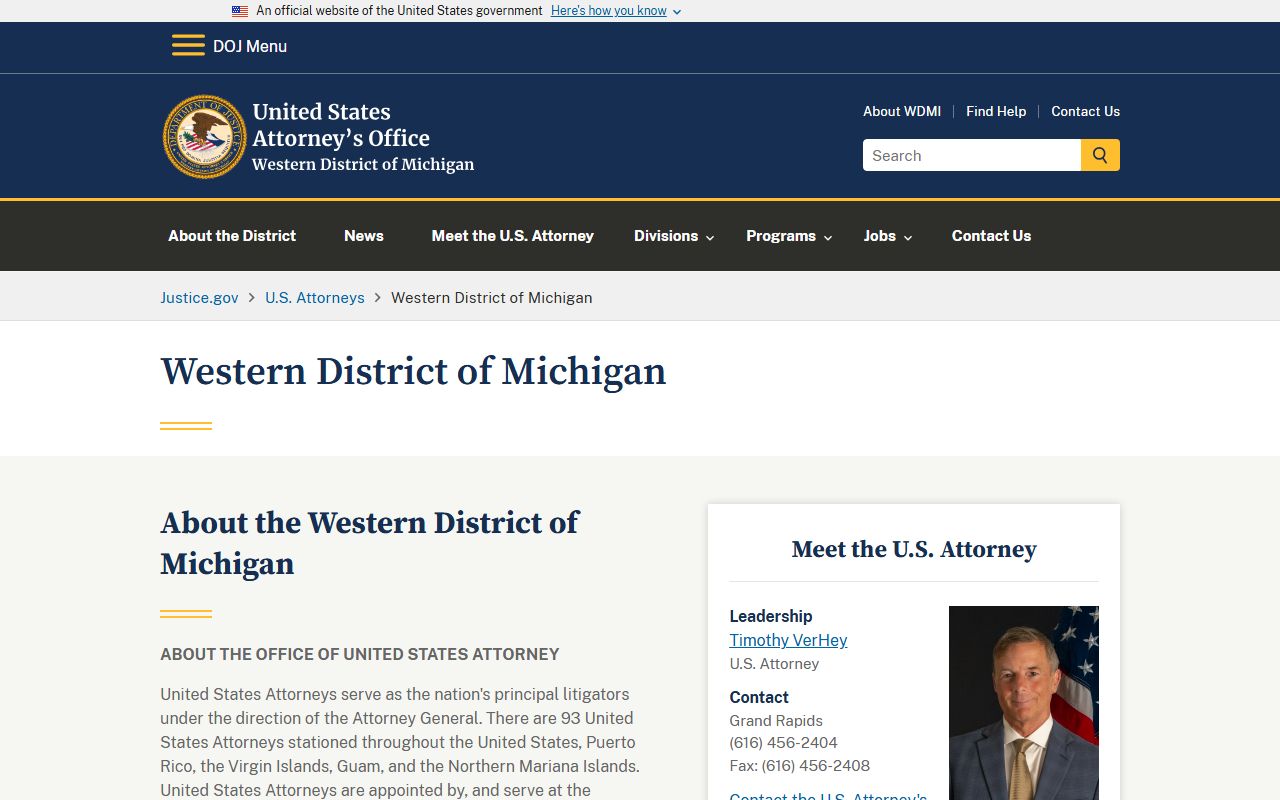
That office decides which cases move forward in federal court and works with the Marshals on arrests. Readers who need to reach it can use its contact page.
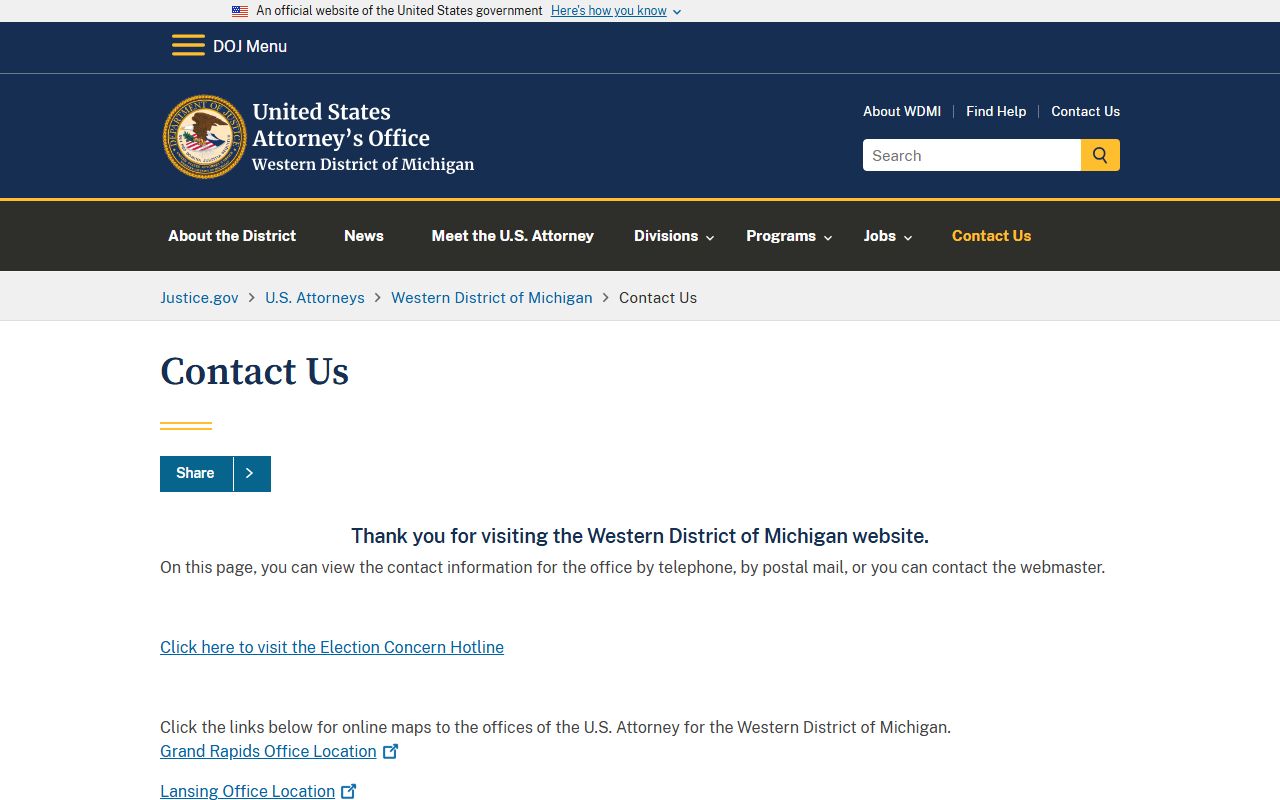
The main office sits in Grand Rapids, and the contact page lists the phone and mailing details for the district. Leadership of the office is described on the meet the U.S. Attorney page.
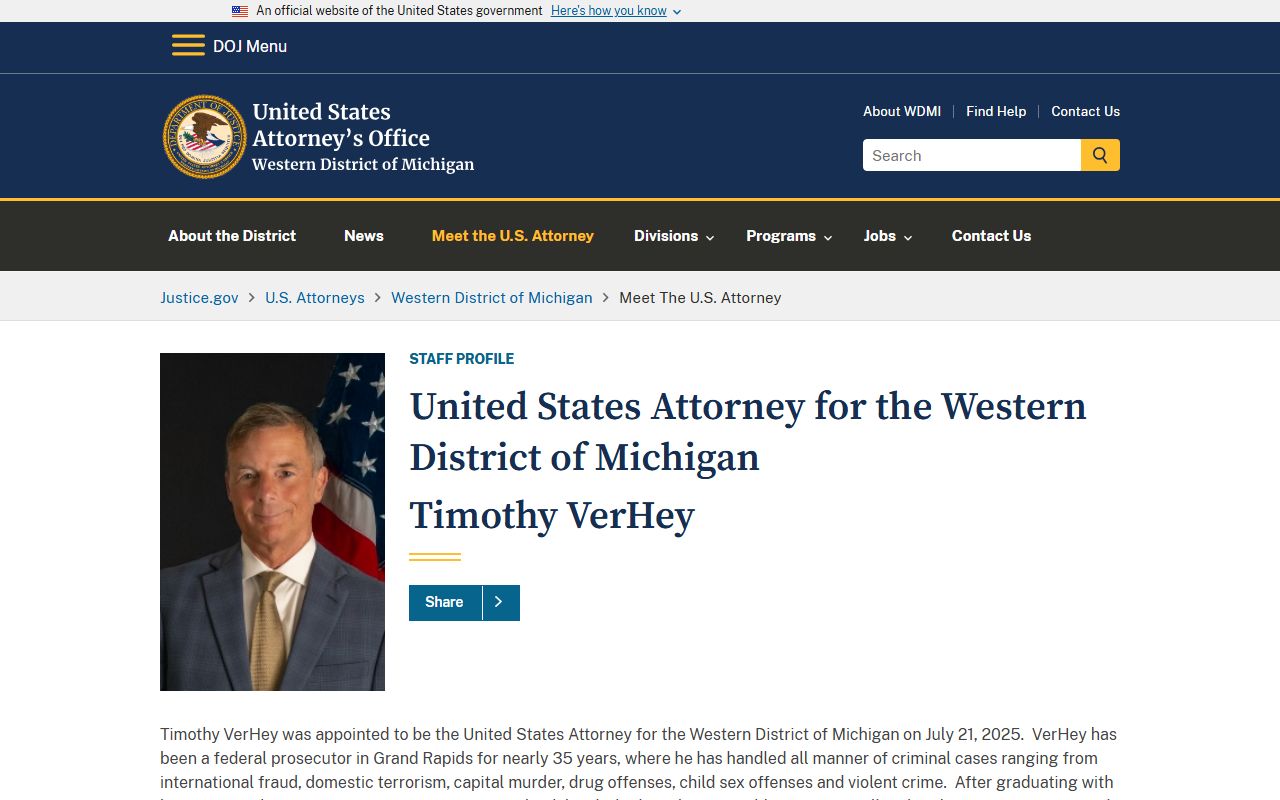
The U.S. Attorney sets the charging priorities for the district that includes Antrim County. For most residents, a federal warrant is rare, but it follows a very different path than a local bench warrant.
Restricted Antrim County Warrant Records
Not every warrant is open to the public. Sealed warrants, juvenile matters, and warrants tied to an active investigation may be withheld. Michigan's court records management rules keep some documents and data off the public online systems even when the case itself is listed.
When a warrant is not visible through the sheriff or the court portals, the county FOIA process is the final fallback. A written request through the county FOIA office forces a formal answer, though protected details may still be redacted. Personal identifiers like birth dates and Social Security numbers are removed from public court files by rule.
For most people, the practical answer comes from the sheriff or the court case, not a public list. The fallback chain exists precisely because Antrim County does not publish active warrants for open viewing.
Note: A sealed or juvenile warrant will not appear in any public search, so a FOIA request may still come back with parts of the record withheld.