
How to Search Antrim County Court Records
Antrim County court records are searched through the 13th Circuit Court public case system and the 86th District Court case links. The county homepage and its online services page route users to both. The circuit civil and criminal searches are free. Both cover Antrim, Grand Traverse, and Leelanau counties, so one search can return cases from all three. Decide which court holds your case before you type a name.
A few details speed up any search. Have the name spelled right, or the case number if you already know it. Civil cases can be pulled by plaintiff or by defendant. Criminal cases search by defendant name. If you only have part of a last name, leave the first name blank so the system can widen the match.
- Decide whether the record sits in circuit court or district court.
- Decide whether the case is civil, criminal, traffic, probate, or domestic.
- Open the 13th Circuit civil search or the criminal search for that court.
- Search by name first when you do not have a case number.
- Use the county dropdown only when the system asks for one.
- Open a result to reach the detail page, then note the judge, filing date, status, and proceedings.
- Fall back to the records office or microfilm when a case predates the online range.
The 13th Circuit Court overview page explains the court's role and its three-county reach. It confirms that the circuit handles felonies, larger civil suits, family matters, and appeals from district court.
That page is the plain-language map for where circuit files live before you ever open the search form. Use it to confirm your case is a circuit matter and not a district one.
Antrim County Court Records Search Fields
The 13th Circuit civil form keeps its fields short. You can start with a last name, add a first name, or switch to the case-number path. Partial last names work only when the first name is left blank. The case-number path needs the case year and a five-digit number, plus the county from the dropdown.
| Field Label | Type | Required | Notes / Format |
|---|---|---|---|
| Last Name | Text | No, common start | Partial name allowed; if partial, leave first name blank |
| First Name | Text | No | Blank when using a partial last name |
| Case Year | Text | Optional path | Four digits, format ccyy |
| Case Number | Text | Optional path | Five digits |
| County | Dropdown | Yes for case-number path | Select County, Antrim, Grand Traverse, Leelanau |
| Submit Query | Button | Yes | Submits the search |
The criminal form mirrors this layout. It searches by defendant name or case number, uses the same county dropdown, and follows the same partial-name rule. The 13th Circuit records contact page links both systems and lists the office that answers file questions.
That contact page is the one to bookmark when a search stalls or a file looks incomplete. It routes you to the county records desk that filed the case.
86th District Court Case Access
District court cases are public, but they are harder to pull online. The county court-cases page lets you look up a case by defendant name or by case number and links both the district and circuit tools. The page did not expose a clean, static search-field table for the district system.
Two limits matter. Civil infractions stay viewable and payable online, so a traffic ticket or ordinance violation is usually easy to check. Criminal case extraction for the district court has been narrowed, so a full misdemeanor file may not show every detail on the web. Misdemeanors and traffic matters live in district court, while felonies move to the circuit system.
When the web view falls short, the 86th District Court cases page is the right entry point. It also points to the phone and office contacts for records that are not fully online.
Note: The circuit criminal database covers felony cases only; misdemeanors and civil infractions stay in the 86th District Court system rather than the circuit portal.
Types of Antrim County Court Records
The same case type does not always live in the same office. Civil, criminal, and domestic files are the core of the county's public court records. Traffic and small-claims matters sit in district court. Probate keeps its own files, and vital records and deeds live outside the courts entirely.
The circuit civil database holds divorce, family support, paternity, damage suits, and appeals from district court. The circuit criminal database holds felony cases. The list below groups the main record types a searcher runs into.
- Civil records: divorce, domestic relations, support, paternity, and damage suits.
- Criminal records: felony complaints, pleas, trials, and sentencing files.
- Family records: custody, child support, and domestic violence docket matters.
- Traffic and misdemeanor records: citations, civil infractions, and district court hearings.
- Probate records: estates, guardianships, conservatorships, and name changes.
- Juvenile records: delinquency and protective cases, most of them restricted.
The full felony case file, from charges through sentence, is covered on the Antrim County criminal court records page. Divorce and family files stay in the civil portal noted above.
What Antrim County Court Records Show
A real county record has a clear shape. Civil cases use numbers such as 2013-6575 DO, and criminal cases use numbers such as 2015-1877 FC. The search form asks for a name or a case number, and the detail page fills in the judge, the dates, the disposition, and a running list of proceedings. That is enough to trace a case from filing to outcome.
| Field | What It Shows |
|---|---|
| Case Number | The court's unique file number, with a type code such as DO or FC |
| County | Which of the three circuit counties filed the case |
| Case Type | The nature of the case, such as divorce or felony |
| Judge | The judge assigned to the file |
| Filing Date | The date the case was issued or opened |
| Disposition | The end result, such as a judgment or a plea |
| Litigants | The parties, their attorneys, and any alias |
| Court Proceedings | The dated list of actions and hearings |
The proceedings list works like a running docket, and each line marks a court event. For a deeper look at how those entries read, the Antrim County court dockets page walks through the codes. The sample below shows a live civil detail page.
The county's own sample civil case detail lays out these fields on one screen.
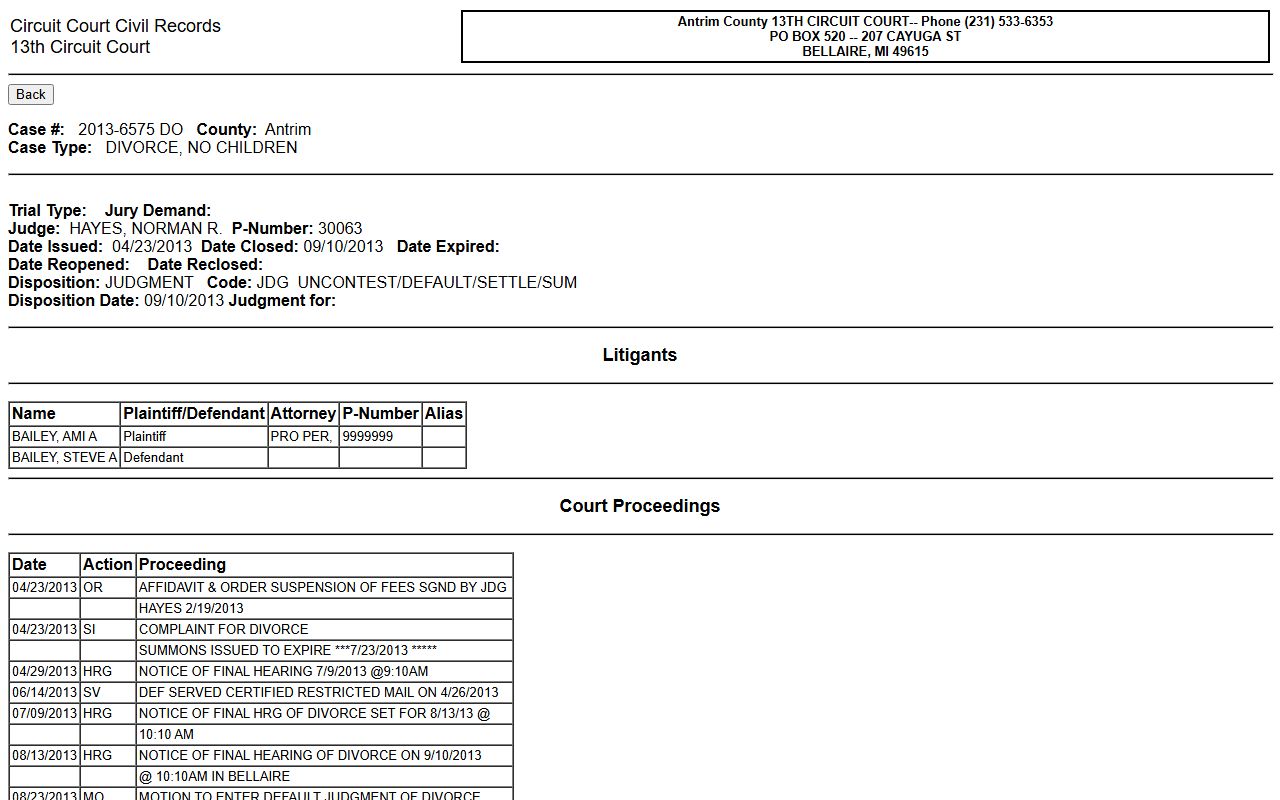
That detail view is the payoff of the search. It turns a name into a full picture of who filed, who ruled, and how the case closed.
Note: Case-type codes such as DO, DM, FC, and FH tell you at a glance whether a file is a divorce, a support case, or a felony matter.
Fields Inside an Antrim County Court Record
The criminal detail page carries more fields than the civil one. It splits the offense and sentencing data from the proceedings log, so a reader can see the charge and the court's answer to it side by side. The list here is drawn from real sample records on the county system.
- Case number and county
- The file number, its code, and the county of record.
- Case type and status
- Such as felony or capital, plus whether the case is open or closed.
- Defendant and birthdate
- The named party and the date-of-birth field, which is often redacted.
- Key dates
- Opened, closed, arraigned, and offense dates.
- Court roles
- Judge, assigned staff, prosecutor, and defense attorney.
- Offense and sentencing table
- Count, plea, conviction, offense, degree, and associated charge.
- Court proceedings table
- Dated actions and hearings from filing to close.
You can view a live sample criminal case detail to see how these fields sit on the page.
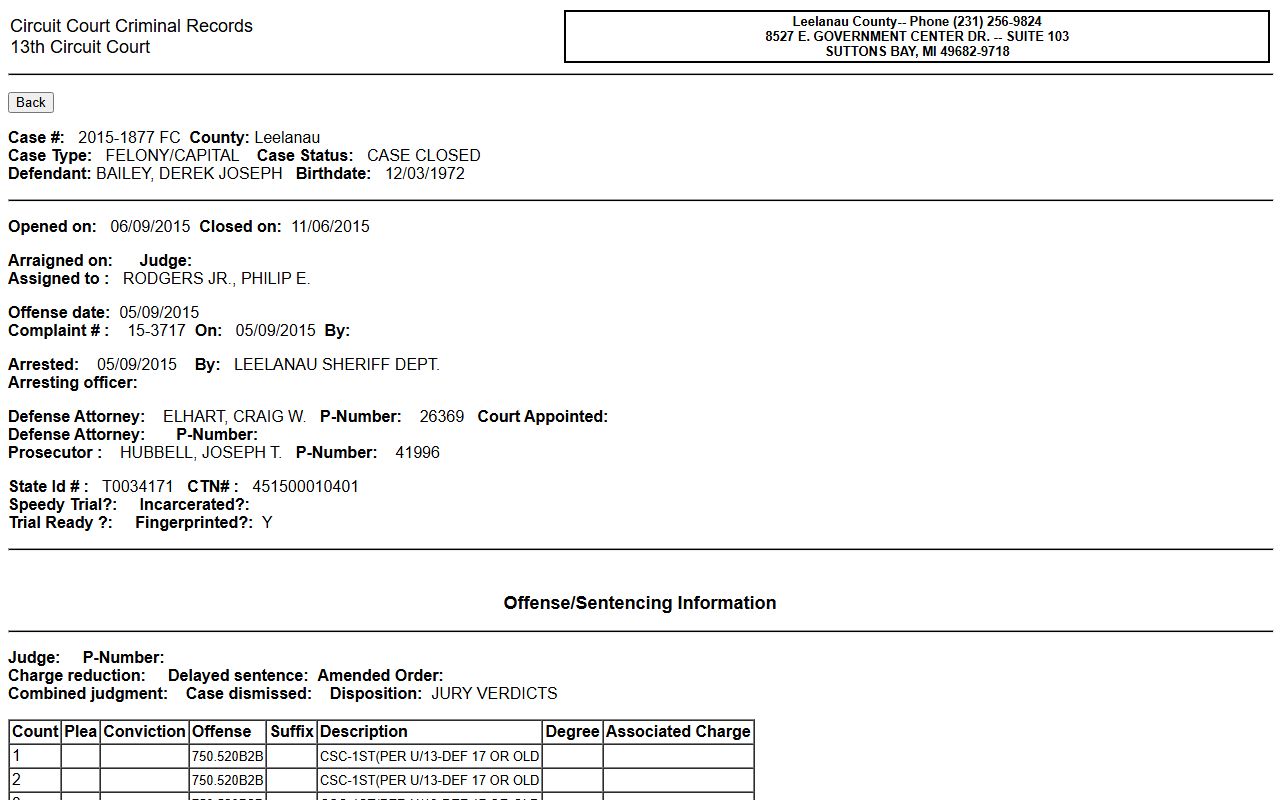
The offense table is the part most people want. It shows the charge as filed and the plea or conviction the court entered against it.
Public Access Framework for Antrim County Court Records
County users do not get records from a statute alone. They get them from the office that holds the file, and the law sits behind that policy as authority. For non-court records, Michigan's Freedom of Information Act under MCL 15.231 gives the public a right to inspect records unless an exemption applies. The exemptions live in MCL 15.243, which lets an office withhold personal or protected information.
Court files follow their own rules. MCR 1.109 defines what counts as a court record and what personal data must be redacted. MCR 8.119 makes court records public to the extent the rule allows, while keeping some documents and images off the web. So the public can often see the case even when a line inside it stays hidden.
The county keeps an FAQ set for court hours and access questions. Its court FAQ page answers the common ones before a records request is needed.
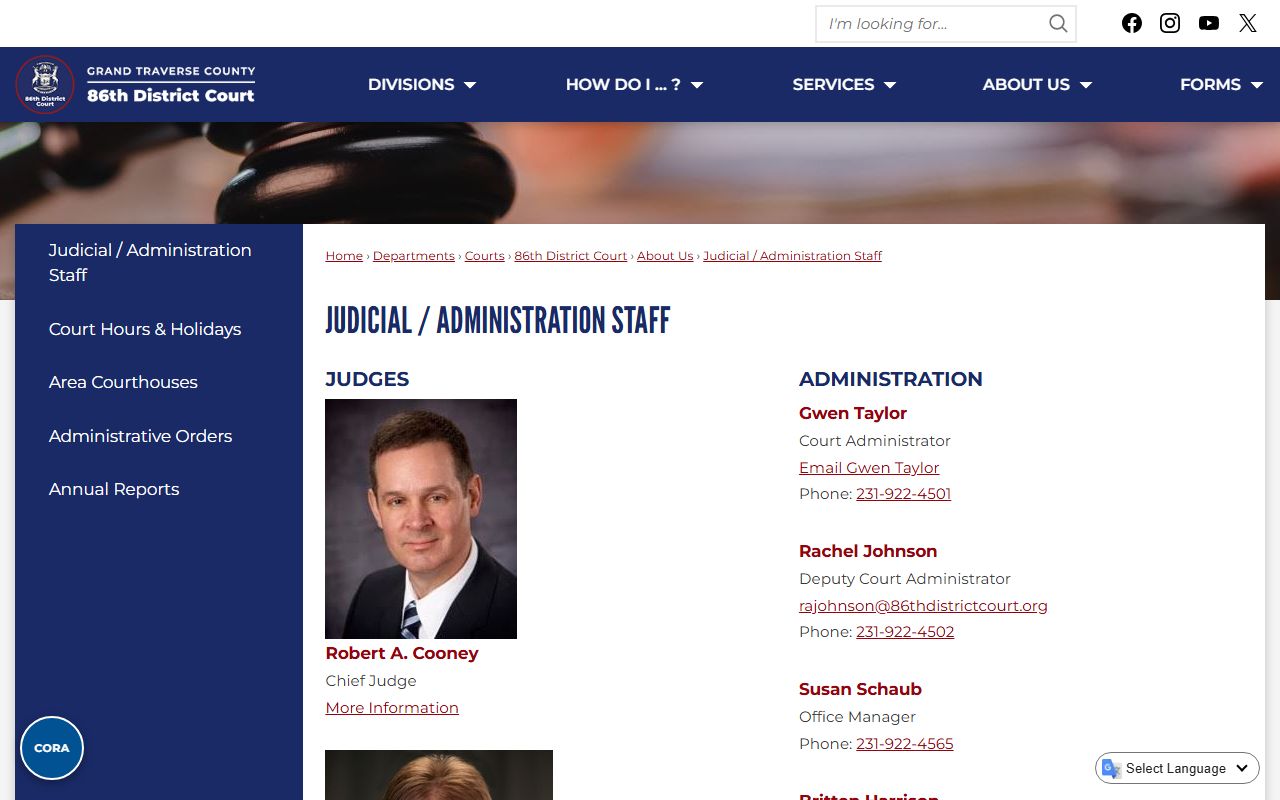
The FAQ is worth a look when you are not sure whether a file is open or which office to call. It saves a trip and a phone queue.
Note: Under the court rules, birth dates, Social Security numbers, driver's license numbers, and financial account numbers are redacted from public case files.
Records That Are Sealed or Confidential in Antrim County
Some records are open and some are not. The clearest example is the civil circuit portal, which no longer lists personal protection order cases. Federal law blocks online disclosure that could reveal the petitioner's identity or location, so those files were pulled from the public web view. The case may still exist; the online window into it is closed.
Other categories stay shielded by court order or by statute. A sealed document is hidden by the court, and an expunged conviction is set aside so it is not treated as an open public record. The list below sums up what the county limits.
- Juvenile delinquency and protective case records.
- Adoption files and some mental health proceedings.
- Sealed and expunged records.
- Personal protection orders with protected petitioner details.
- Redacted personal identifiers inside otherwise public files.
To view a sealed file, a person usually files a motion and asks the court to unseal or grant access. The court weighs the reason against the privacy interest that led to the seal. County name-change filings show the same logic in reverse, since they let a petitioner request nonpublic and confidential treatment through a personal identifying information form.
Older Antrim County Court Records and Microfilm
The online portals do not reach all the way back. The circuit criminal database includes cases filed from 1981 to the present. The civil database holds 1967 through 1985 as index information and 1986 to the present as full case files and register of actions. Records office holdings in the shared court system date to 1859, which matters for deep circuit-case history.
Older cases without a digital index are not lost. They can be viewed on microfilm at the records office. For copies and certified files, the circuit and family court accept requests by mail, in person, and through their online request tool. The circuit and family court records request page lists the methods and fees.
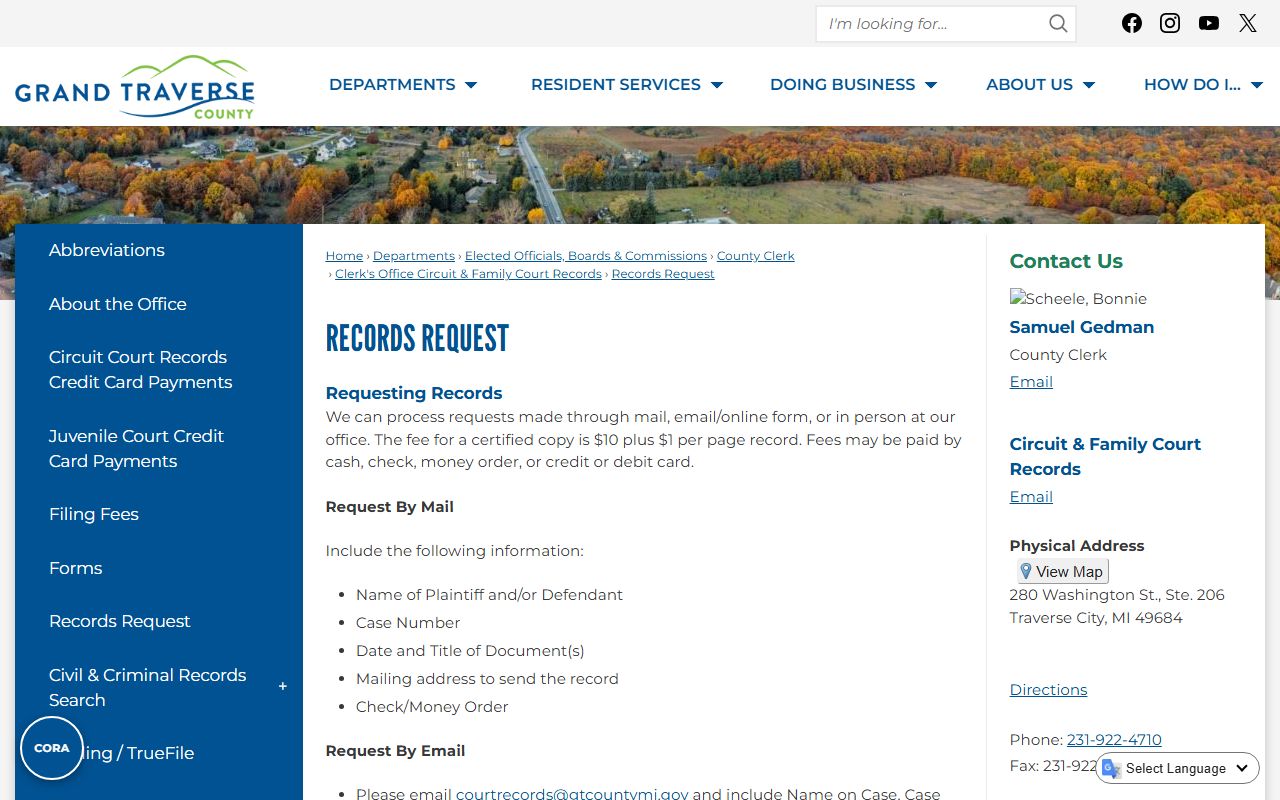
That page is the fallback when the search box comes up empty. Use it to order a certified copy or to ask staff to check a file the web view does not show.
Note: A case older than the online database range may still be on file; ask the records office to check its microfilm before you assume the record is gone.
In-Person Court Record Requests
Some questions are faster in person. The county clerk is the records hub for the circuit court, and staff can pull older files, explain fees, and take payment by cash, check, or card. Bring a photo ID and the case number if you have it. The office sits on the Cayuga Street government block in downtown Bellaire, a short walk from the historic courthouse.
The clerk also fields questions the online portal cannot answer, such as a file that predates the digital index or a record held off the web. Call ahead when you need a certified copy so staff can confirm the fee before you arrive.
Antrim County Clerk of Court
203 E Cayuga St, PO Box 520
Bellaire, MI 49615
231-533-6353
Monday to Friday, 8:30 a.m. to 5:00 p.m.