
How to Search Antrim County Traffic Court Records
Antrim County traffic cases run through the 86th District Court, which the county reaches from its online services page. That page links both the district court case lookup and the district court payment portal. The district court is the correct home for civil infractions, traffic tickets, and other lower level moving or nonmoving violations. The county does not run a separate traffic citation portal apart from this district court case system, so one search tool covers most tickets. The court cases page is the gateway to the district lookup.
Gather a few details before starting. A citation number pulls the exact ticket fastest. A driver name works when the number is lost. The 86th District Court is a tri-county court that also serves Grand Traverse and Leelanau, so confirming the county keeps results tight. Civil infractions stay viewable and payable online, while extraction of some criminal case detail has been limited on the public side.
- Open the district court case lookup from the county online services page.
- Choose the 86th District Court and, when asked, the county.
- Enter the citation or case number, or search by the driver's last name.
- Open the matching case to read the charge, court date, and disposition.
- Pay the fine, request a hearing, or ask the clerk for a certified copy.
Which Courts Handle Traffic Cases in Antrim County
The 86th District Court hears traffic cases for Antrim County. Its Bellaire office handles civil infractions, traffic tickets, misdemeanor traffic charges, and local ordinance matters. The circuit criminal portal is not the traffic record. That portal is built for felonies, so most drivers never need it for a ticket. When a traffic case rises to a felony, such as some repeat drunk driving charges, the case moves to the 13th Circuit Court instead.
Appeals follow a set path. A district court traffic ruling can be appealed to the circuit court. From there, a further appeal reaches the Michigan Court of Appeals, and Antrim County sits in that court's Fourth District. Most tickets never travel this far, but the ladder matters when a driver challenges a serious result.
| Court | Traffic Cases Handled | Contact |
|---|---|---|
| 86th District Court, Antrim County | Civil infractions, traffic tickets, misdemeanor traffic, local ordinance violations | 205 E Cayuga St, Bellaire, MI 49615; 231-533-6441 |
| 13th Circuit Court | Felony traffic charges and appeals from the district court | 205 E Cayuga St, Bellaire, MI 49615; 231-533-6353 |
| Michigan Court of Appeals | Further appeals from the circuit court | Fourth District |
The Michigan Court of Appeals overview explains how the intermediate appellate court reviews trial decisions statewide.
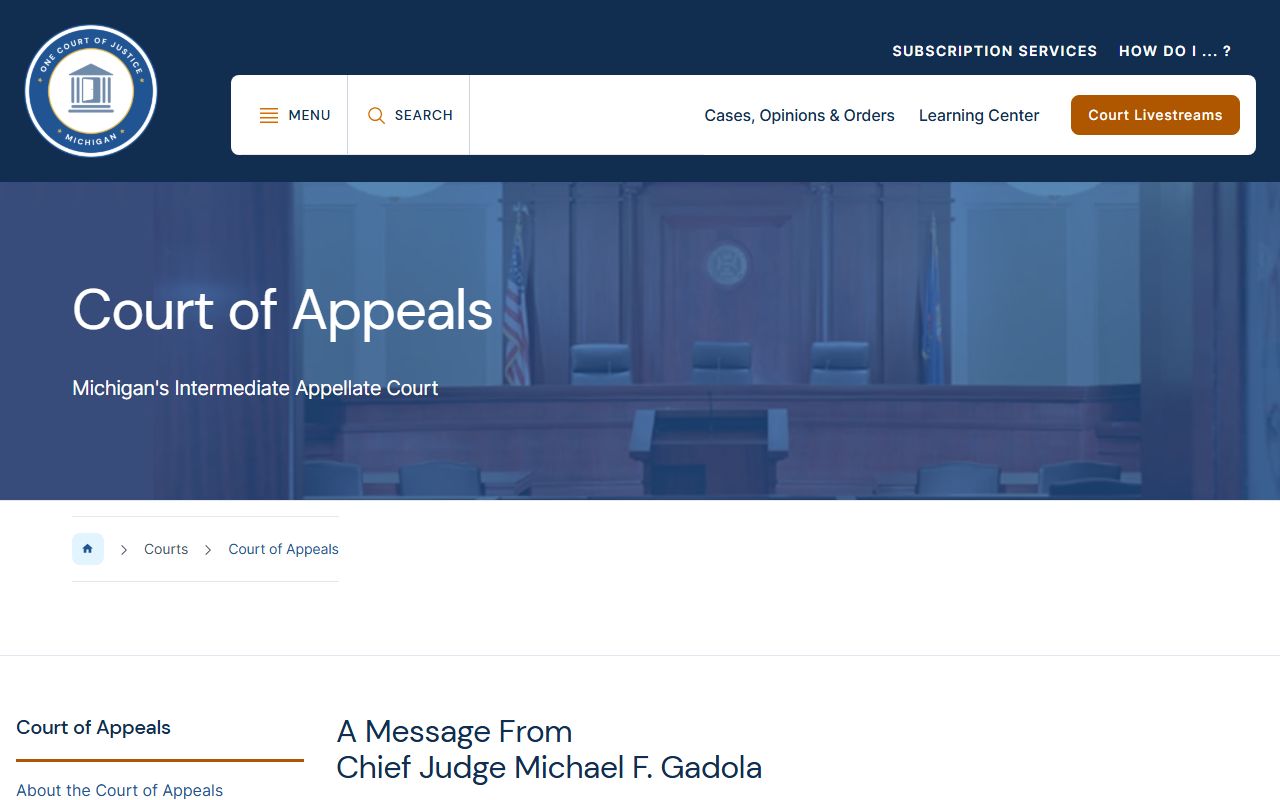
That appellate layer sits above the local courts that decide almost every Antrim County traffic ticket. Note: The 86th District Court serves Antrim, Grand Traverse, and Leelanau counties, so always confirm Antrim County when a search asks which county filed the ticket.
Types of Antrim County Traffic Cases
Traffic records in the district court cover more than speeding tickets. Some cases are civil infractions that end with a fine. Others are misdemeanor charges that carry the risk of jail. The split shapes how the case is searched, paid, and resolved. Knowing the type also tells a driver whether the matter can be handled by mail or needs a court appearance.
- Moving violations - speeding, careless driving, and failure to yield are the most common tickets.
- Nonmoving violations - equipment defects, registration problems, and parking issues fall here.
- Civil infractions - non-criminal tickets resolved by a set fine or a hearing.
- Misdemeanor traffic - driving on a suspended license and reckless driving can bring criminal penalties.
- Commercial vehicle citations - tickets tied to trucks and drivers who hold a commercial license.
What Antrim County Traffic Court Records Show
A traffic case file follows a predictable shape. It opens with the citation and the charge, then tracks the court date and the final result. The record shows what the driver was accused of and what the court did about it. It does not list every point on a license, because points belong to the state driver record instead. The fields below are the ones a searcher usually wants first.
| Field | What It Shows |
|---|---|
| Citation Number | The ticket's unique identifier, used to pull the exact case |
| Charge / Statute | The violation cited and its Michigan code section |
| Court Date | The scheduled hearing or arraignment date |
| Disposition | How the case ended, such as paid, dismissed, or responsible |
| Fine Amount | Fines, costs, and fees owed to the court |
| Case Status | Whether the ticket is open, closed, or in warrant status |
Searching by Citation Number or Name
Two search paths lead to the same record. A citation or case number is the direct route and avoids mix-ups. A name search helps when the paper ticket is gone, but a common last name can return several matches. Enter the digits exactly as printed to avoid a false miss. When the name path returns a crowded list, the birth date or case year narrows it fast.
| Search Field | Type | Required | Notes / Format |
|---|---|---|---|
| Citation / Case Number | text | one path | Pulls the exact ticket; enter digits as printed |
| Driver Last Name | text | one path | Use when the number is lost; may return several matches |
| County | menu | yes | Select Antrim within the tri-county system |
Paying or Contesting an Antrim County Traffic Ticket
A civil infraction can be paid without a court visit. The county links the 86th District Court payment portal from its online services page, and civil infractions remain payable online. Payment closes the case and accepts responsibility for the violation. Watch the response deadline printed on the ticket, since a missed date can add costs or trigger a hold on the license.
Contesting a ticket means asking the court for a hearing instead of paying. Michigan drivers can request an informal hearing before a judge or magistrate, or a formal hearing with the citing officer present. At the hearing the driver explains the situation and the court decides the result. The judge may keep the fine, reduce it, or dismiss the ticket.
- Read the ticket for the response deadline and the listed violation.
- To pay, open the district court payment portal from the county online services page and enter the citation.
- To contest, ask the district court for an informal or formal hearing instead of paying.
- Appear at the scheduled hearing and present your side to the judge or magistrate.
- Pay any reduced fine or accept the disposition the court enters.
Note: A traffic ticket carries a firm response deadline, and ignoring it can lead to added court costs, a default judgment, or a hold placed on the driver's license.
Public Access Laws for Antrim County Traffic Records
Traffic court files are public records, but access runs through court rules rather than a single open door. Michigan's Freedom of Information Act sets the baseline for public records held by county offices. Court files themselves follow the Michigan Court Rules, which decide what is open, what is redacted, and what stays offline. Personal identifiers such as birth dates and driver's license numbers are removed from public view even when the case is open.
The state's records management rule governs how trial courts keep and share these files. It confirms that court records are public to the extent the rule allows, while some images and data are not posted online. A reader can often see the docket without seeing every attachment.
Key Statutes:
Michigan FOIA, MCL 15.231 - gives the public a right to inspect public records unless a specific exemption applies.
Michigan Court Rule 8.119 - defines how trial courts keep court records and which items are open to the public.
The Michigan Courts records management page lays out how trial courts store and release case files.
Those rules are why an Antrim County traffic record can be searched online yet still hide protected personal data inside the file.
Court Traffic Records vs State Driver Records
These are two different files, and drivers often confuse them. The court traffic record is the case file the 86th District Court keeps for a single ticket. The state driver record is a separate history held by the Michigan Secretary of State. One shows how a ticket was handled in court. The other shows the convictions, points, and license status that follow a driver across every case.
| Comparison Point | Court Traffic Record | State Driver Record |
|---|---|---|
| Record source | 86th District Court case file | Michigan Secretary of State driving record |
| What it shows | Citation number, charge, court date, disposition, fine | Convictions, points, license status, driving history |
| Where to access | County online services district court lookup | Secretary of State driving record portal |
| How to correct errors | Contact the district court clerk that holds the case | Contact the Secretary of State to fix the state file |
The Michigan Secretary of State driving record page is the official source for the state file.
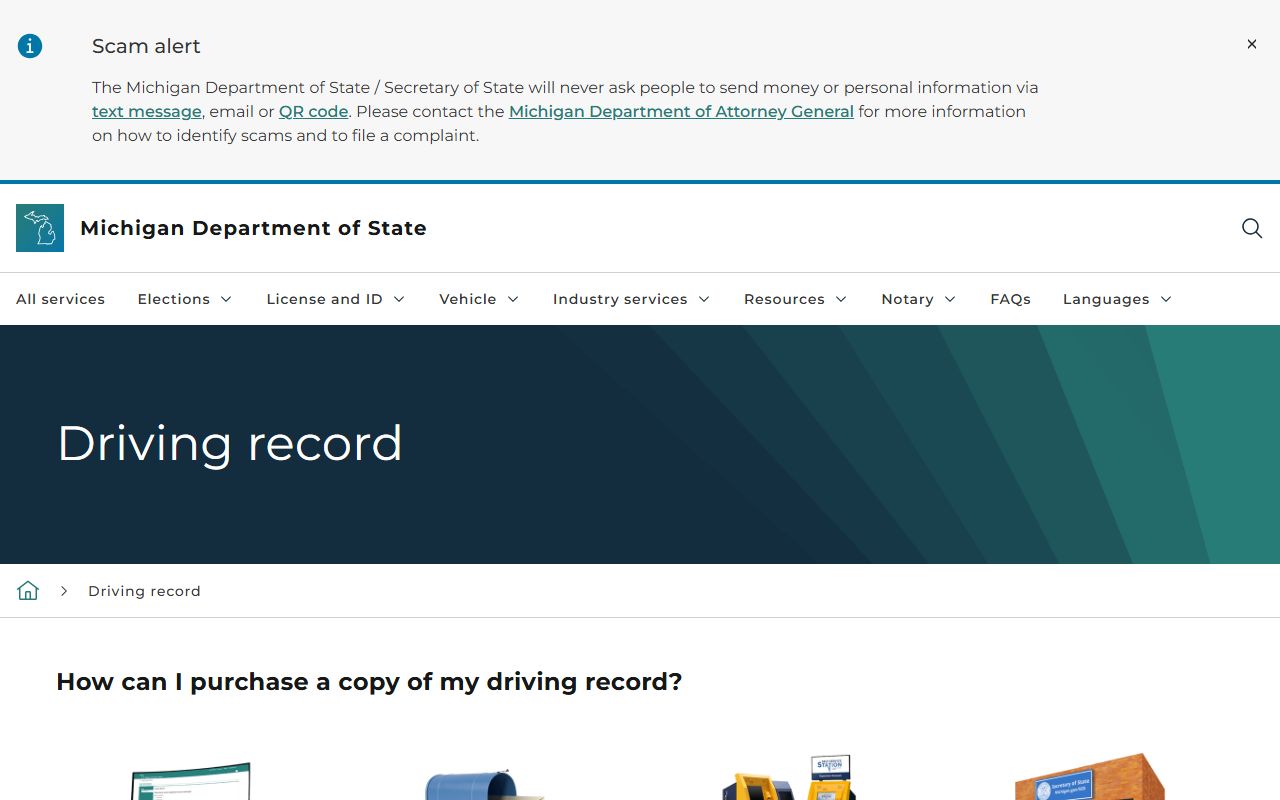
Reading both files together gives the full picture, since the court record explains a single ticket while the state record shows the driving history behind it. Note: An error on the court file is fixed with the district court, while an error on the state driving record must be corrected through the Michigan Secretary of State.
Requesting a Michigan Driver Record
The state driver record is ordered from the Secretary of State, not the county court. An online record requires a MiLogin account, and the record stays visible for seven days after purchase. An online certified copy costs sixteen dollars. Drivers and companies that prefer paper use the BDVR-154 request form, which asks for the fields below and sets the fee by record type.
| Field | Type | Required | Notes |
|---|---|---|---|
| Requestor name | text | yes | Listed on the first page of the form |
| Requestor type | radio | yes | Individual or company |
| Daytime phone | text | yes | Contact phone number |
| Company name | text | conditional | Company requests only |
| Mailing address | text | yes | Includes city, state, and ZIP |
| Delivery choice | radio | yes | Mail same address, mail different address, or email |
| Record type | checkbox | yes | Driver record, state ID, history, or other driving record |
| Primary reason | radio | yes | Employment, insurance, court, lease, and other options |
| Driver's license or state ID number | text | yes | The record lookup identifier |
| Full name | text | yes | The record subject |
| Date of birth | text | yes | The record subject |
| Payment | fee section | yes | Fee varies by record lookup, certified record, or history |
The Secretary of State driver and vehicle records FAQ explains who may buy these records and how the state protects them.
That FAQ helps drivers decide whether they need the court file, the state driving record, or both before they pay a fee.
CDL and Commercial Driver Records
Commercial drivers face stricter rules than other motorists. A ticket that seems minor for a private driver can threaten a commercial license and a livelihood. Michigan reports commercial convictions to the driver record, and federal rules limit how a commercial license holder can keep a violation off that history. The county materials reviewed do not publish a separate local rulesheet for commercial drivers, so a CDL holder should confirm the details with the district court or a defense attorney before resolving a ticket.
What stays constant is the record trail. A commercial conviction lands on the state driving record and can reach the federal system that tracks commercial drivers. That makes accurate handling of even a small ticket important for anyone who drives for work.
DUI and DWI Traffic Cases in Antrim County
Drunk and drugged driving cases are not ordinary traffic tickets. A first offense is a misdemeanor handled in the district court, while repeat or aggravated cases can become felonies routed to the circuit court. These cases carry criminal penalties, so they follow the criminal case track rather than the civil infraction path. Felony drunk driving files appear in the 13th Circuit criminal records search.
Eligible drivers may enter Sobriety Court, a recovery court that offers treatment and supervision as an alternative to jail. The Sobriety Court program serves Antrim and Grand Traverse and aims to reduce repeat drunk driving. For the full case file and sentencing detail, the Antrim County criminal court records page covers how these charges move through the courts.
The Court of Appeals district map shows Antrim County in the Fourth District, which hears further appeals in serious cases.
That map matters when a drunk driving conviction is appealed beyond the trial courts. Note: A DUI or DWI case is a criminal matter, so it appears in the criminal court file and the state driving record, not only in the traffic ticket system.
Sealing or Expunging Antrim County Traffic Records
Traffic relief depends on whether the case was a civil infraction or a crime. A civil infraction is not a criminal conviction, so it is not expunged the way a criminal record is. Misdemeanor traffic convictions may qualify for a set aside under Michigan's expungement law, subject to waiting periods and eligibility limits. Drunk driving convictions have their own narrow rules and are not treated like a routine ticket.
The main relief statute is MCL 780.621, which sets out how eligible convictions can be set aside. A driver checks eligibility, confirms the waiting period, files a petition with the correct court, and attends any hearing the court schedules. Because eligibility is fact specific, confirm the details with the court before filing.
Fees for Antrim County Traffic Records
Fines and record fees are two different costs. The fine is set by the violation and the court. Record fees apply when a driver buys a copy of a driving history. The county materials reviewed do not publish a separate district court copy price for traffic files, so the state driver record fees are the clearest published schedule. The 86th District Court page is the place to confirm any local copy charge.
| Item | Amount |
|---|---|
| State driver record lookup | $15 |
| Certified driver record | $16 |
| Online certified driving record copy | $16 |
| Driving history request | $15 |
Ordering the right record the first time avoids a repeat fee, since a court copy and a state driving record serve different needs.