
What Is a Court Docket in Antrim County
A court docket is the official list of events in a case, kept in date order from the first filing to the last ruling. In Antrim County, each docket line marks something the court did or received. That could be a complaint, a motion, a hearing, or a judgment. The docket is a map of the case, not the case itself. It tells you what happened and when, and it points to the documents behind each step.
The docket differs from the full case file. The file holds the actual papers, while the docket holds the short log of those papers.
Antrim County dockets are split by court. The 13th Circuit Court keeps dockets for felonies, larger civil suits, divorces, and appeals from district court. The 86th District Court keeps dockets for misdemeanors, traffic, and civil infractions. Probate and family cases run on their own docket in the historic Bellaire courthouse. Knowing which court holds the case tells you which docket to read, and it saves a wasted search in the wrong system.
Note: A docket entry is a summary line, so the full text of any order or motion still lives in the case file the clerk keeps for that matter.
How to Find Antrim County Dockets Online
Most Antrim County docket work starts online. The county links its civil and criminal case portals through the shared 13th Circuit system, while district cases run through the county court-cases page. Both are free to use, and both return a docket-style list of proceedings once you open a case. The circuit civil case search and criminal case search cover Antrim, Grand Traverse, and Leelanau counties, and the county court-cases page gathers the district links in one place.
The tri-county courts also post upcoming hearings on the shared 13th Circuit and 86th District court calendar, which lists dates by division.
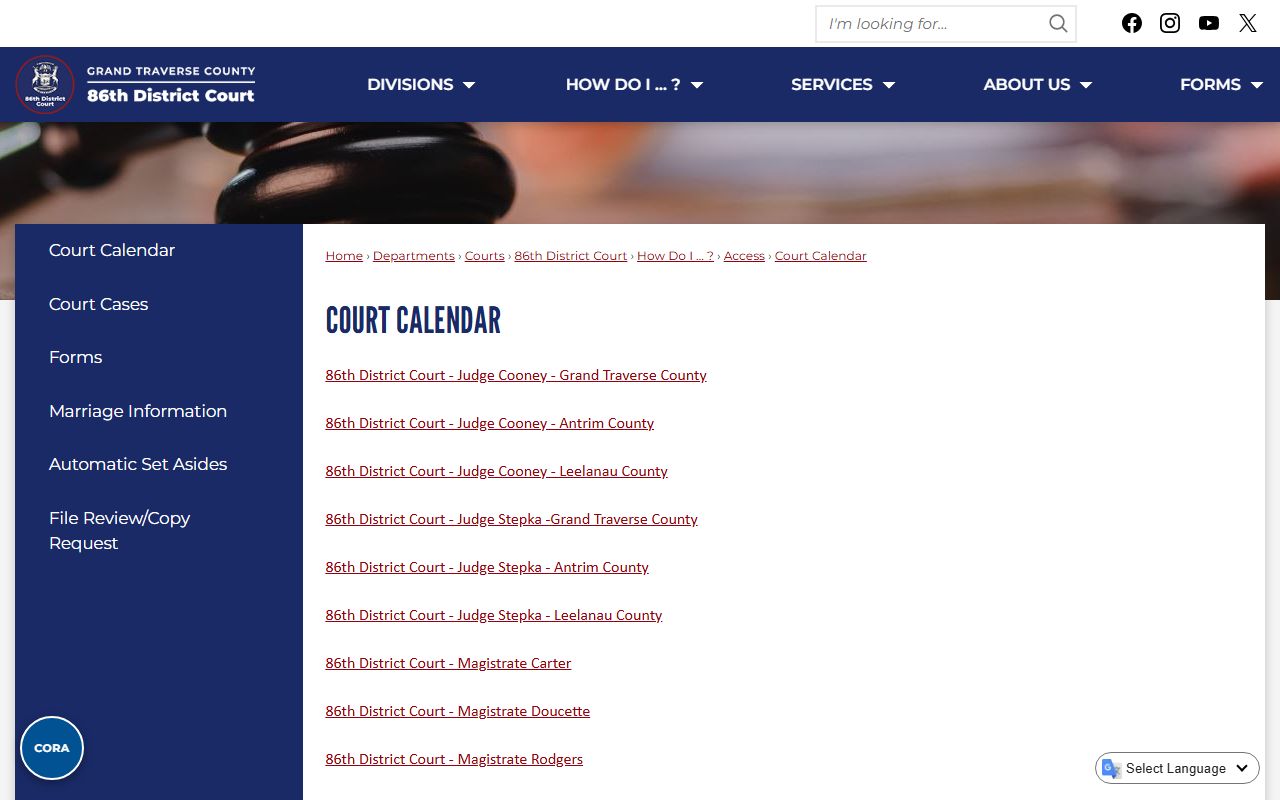
That calendar is the quickest way to confirm when an Antrim County docket sets a case for a hearing, and it works well when you know the court but not the case number.
The steps below work for both the circuit and district systems.
- Decide whether the case is circuit or district, and civil or criminal.
- Open the matching portal from the county court-cases page.
- Search by a party name, or by case year and case number if you have it.
- Pick the county from the dropdown when the case-number path asks for one.
- Open the case result to reach the detail page and its proceedings log.
- Read the docket entries by date, and note the judge, filing date, and status.
Some records fall outside the online range. For a case older than the portal covers, or for a docket the portal does not show, the records office can pull the paper or microfilm file. The 13th Circuit records office answers at 231-533-6353, and the 86th District Court answers at 231-533-6441. Copies can also be ordered through the circuit and family records request page.
Courts That Publish Antrim County Court Dockets
Not every court posts the same amount online. Michigan uses three trial courts, and each one keeps its own docket.
The state's trial courts overview lays out how the circuit, district, and probate courts divide the work.
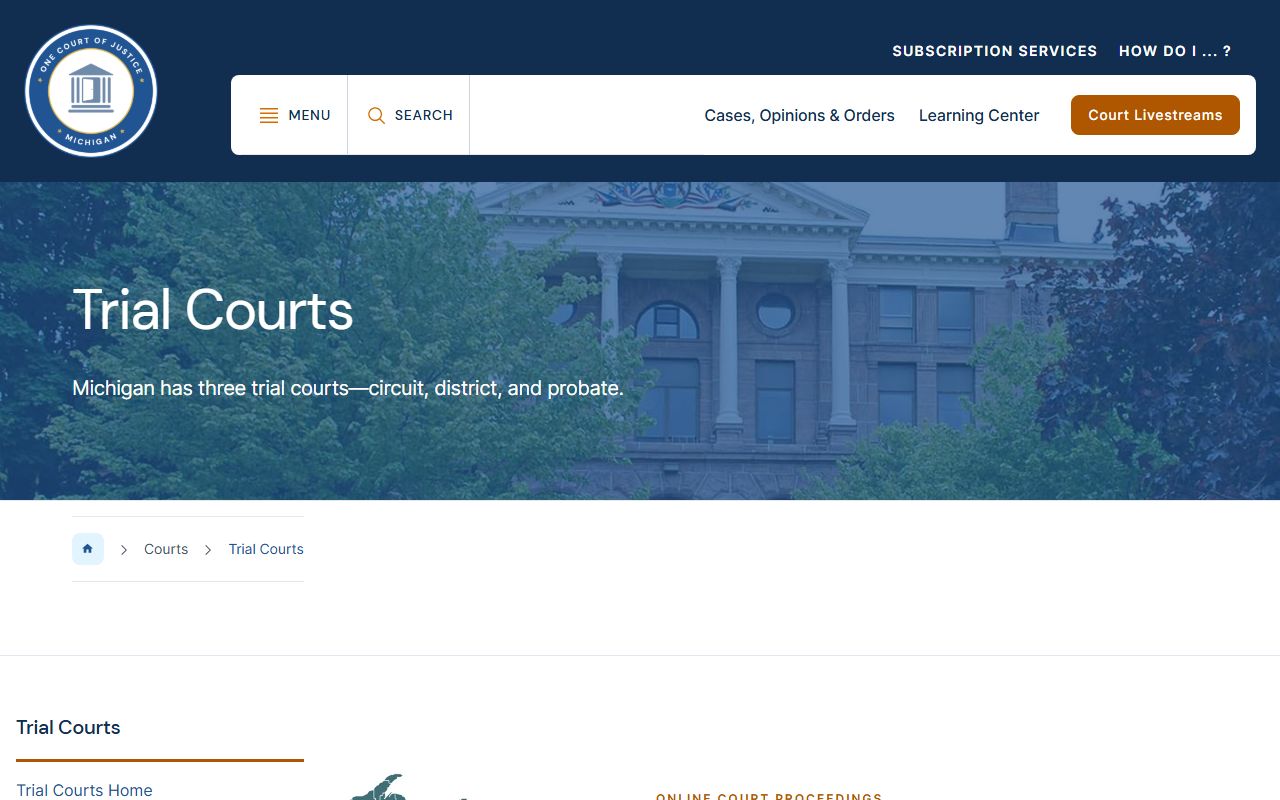
That structure is why an Antrim County docket can live in three different systems. In this county the split works like this.
- 13th Circuit Court: felony criminal dockets filed from 1981 forward, plus civil and domestic dockets searchable by name or case number.
- 86th District Court: misdemeanor, traffic, and civil-infraction dockets, with infractions viewable and payable online.
- Probate and Family Division: estate, guardianship, and family dockets, posted as a dated PDF on the court home page.
- Michigan Courts case search: appellate opinions and orders for cases that leave the county.
The 13th Circuit Court and the 86th District Court are the two busiest sources, while the Michigan Courts case search handles appeals. One class of case is missing on purpose. PPO matters no longer appear on the civil portal, because federal law blocks online disclosure that could reveal a petitioner's location. The docket for those cases still exists at the court, just not online.
Reading Antrim County Docket Codes
Docket lines lean on short codes. The circuit search results and case-detail pages show a common set, and learning them turns a wall of abbreviations into a clear timeline. The same codes appear in both civil and criminal proceedings logs, so once you know them, most Antrim County dockets read the same way.
| Code | What It Means |
|---|---|
| OR | Order entered by the judge |
| SI | Complaint filed in a civil case |
| HRG | Hearing |
| SV | Service of process |
| MO | Motion |
| D | Default request or default entry |
| JDG | Judgment |
| CB | Bind over to circuit court |
| FI | Felony information |
| NFC | Notice of final conference |
| NJT | Notice of jury trial |
| CPT | Criminal pre-trial and scheduling conference |
| MR | Response or reply filing |
| NOH | Notice of hearing |
These codes do more than label a line. They show the shape of the case. A string of NOH and HRG entries means the matter is still being heard, while an OR or JDG line usually signals a ruling. If a defined legal term shows up in a proceeding, the county glossary on the main records pages can help decode it.
Note: Codes can vary slightly between the civil and criminal systems, so always read the full proceeding text next to the code before drawing a conclusion.
Sample Antrim County Docket Entry
Every proceedings log uses the same three columns. Each row is one event, listed in date order under the case number. Reading down the column tells you the story of the case without opening a single document.
- Date: the day the court recorded the event, from filing through disposition.
- Action: the short code for the event, such as HRG for a hearing or MO for a motion.
- Proceeding: the plain description tied to the code, spelling out what the court did.
Read together, the rows trace the whole matter. A civil case might open with SI for the complaint filed, move through SV for service and MO for a motion, and close with JDG when the judge enters judgment. A criminal case might show CB for a bind over, FI for the felony information, CPT for a criminal pre-trial, and NJT for a notice of jury trial. The criminal detail page also separates the offense and sentencing table from the proceedings log, so the charge and the outcome sit next to the day-by-day docket.
Docket vs. Full Case File in Antrim County
People often use docket and case file to mean the same thing, but they are not. One is the index, and the other is the stack of paper behind it.
| Docket | Full Case File | |
|---|---|---|
| Format | List of dated entries | Complete documents |
| Content | Event codes and short descriptions | Motions, orders, exhibits, and pleadings |
| Access | Often online and free | May require a records request or a visit |
| Best use | Track case progress and hearing dates | Legal review and evidence |
For most people the docket answers the question. It shows the next hearing, the last order, and whether a case is open or closed. When the actual document matters, the complete file with the real motions, orders, and exhibits sits in the Antrim County court records the clerk maintains, and part of that file may be sealed or redacted under Michigan court rules.
Note: Docket activity can be public even when an attached document is sealed, so a visible entry does not always mean the full paper is open.
Family Court and Friend of the Court Dockets
Family and probate cases follow a different docket path. The Probate Court and Family Division posts a combined docket as a dated PDF on its court home page, listed as a Family Court and Probate Court Docket for a set date range. That listing shows the estates, guardianships, and family matters set for hearing in a given week, and it is the clearest public docket sample the probate court publishes.
The Friend of the Court supports the family docket in Antrim County.
The tri-county Friend of the Court office handles support, custody, and parenting-time enforcement.
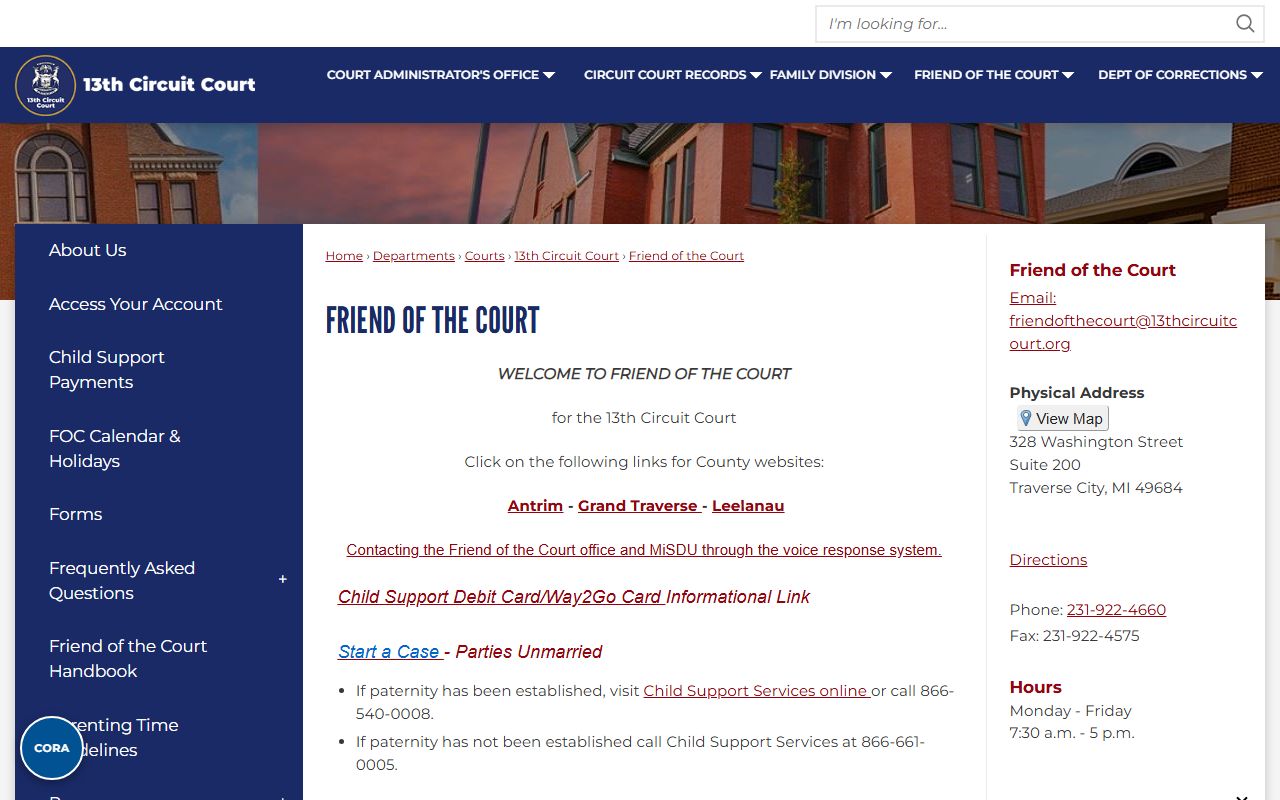
Because the Friend of the Court manages support and parenting matters, its work often shows up as entries on the family docket. To reach the probate and family division directly, the office answers at 231-533-6681. Some friend-of-the-court materials are not placed in the public court legal file, so not every internal record appears on the docket.
Sobriety and Recovery Court Dockets in Antrim County
Some Antrim County cases move onto a specialty docket instead of the standard track. Sobriety Court is one of them. It is a recovery court for repeat drunk-driving offenders, run as an alternative to jail for people who qualify. The program started in 2001 and serves the Antrim and Grand Traverse courthouse locations.
The tri-county Sobriety Court page describes the program and its recovery-court mission.
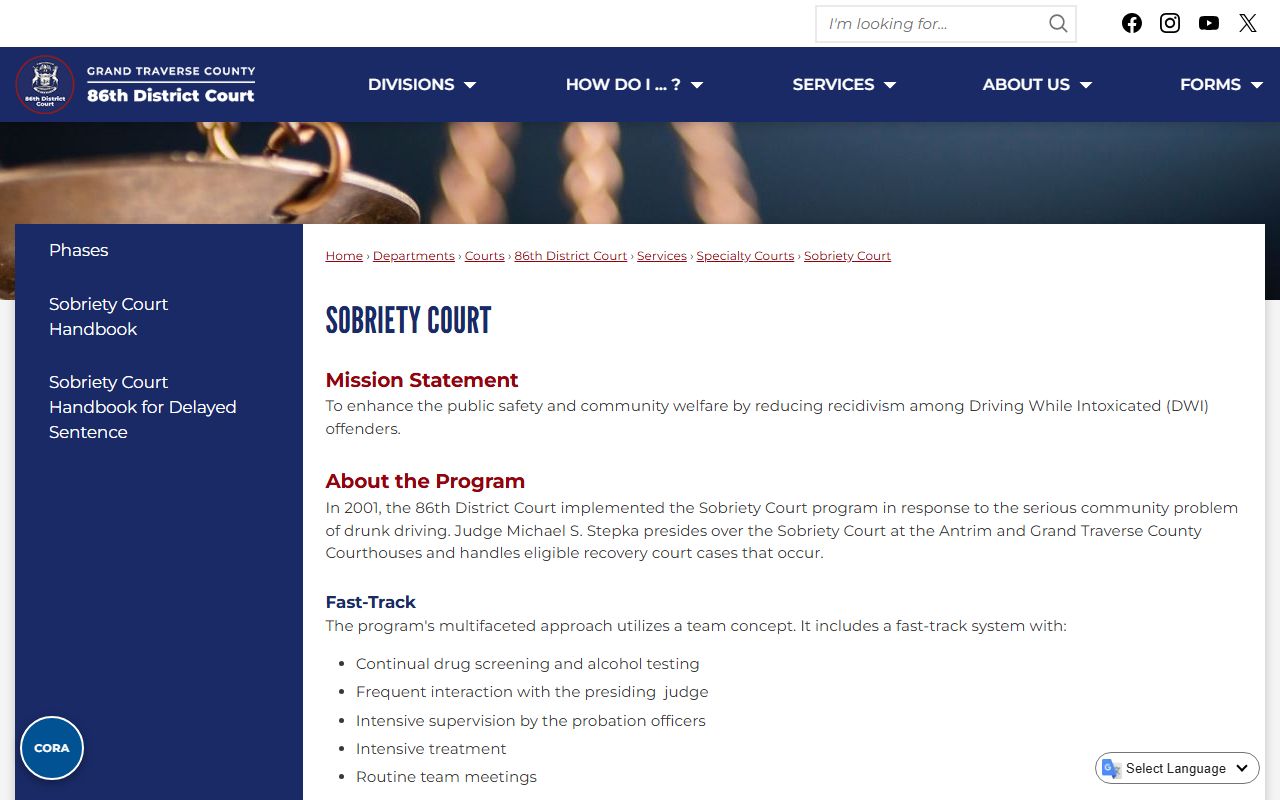
A case on the Sobriety Court docket looks different from a standard criminal docket. Instead of a single hearing and a judgment, the docket fills with regular review dates as the participant works through the program. That steady rhythm of review hearings is the signature of a problem-solving court.
Domestic Violence Court Dockets in Antrim County
Domestic Violence Court runs a fast-track docket. The criminal division handles all misdemeanor domestic-violence charges filed in Antrim and Grand Traverse counties, and the docket is sped up so disruption to the family is reduced. The goal is to move these cases through the court quickly rather than letting them sit.
The Domestic Violence Court page lays out how the docket works.
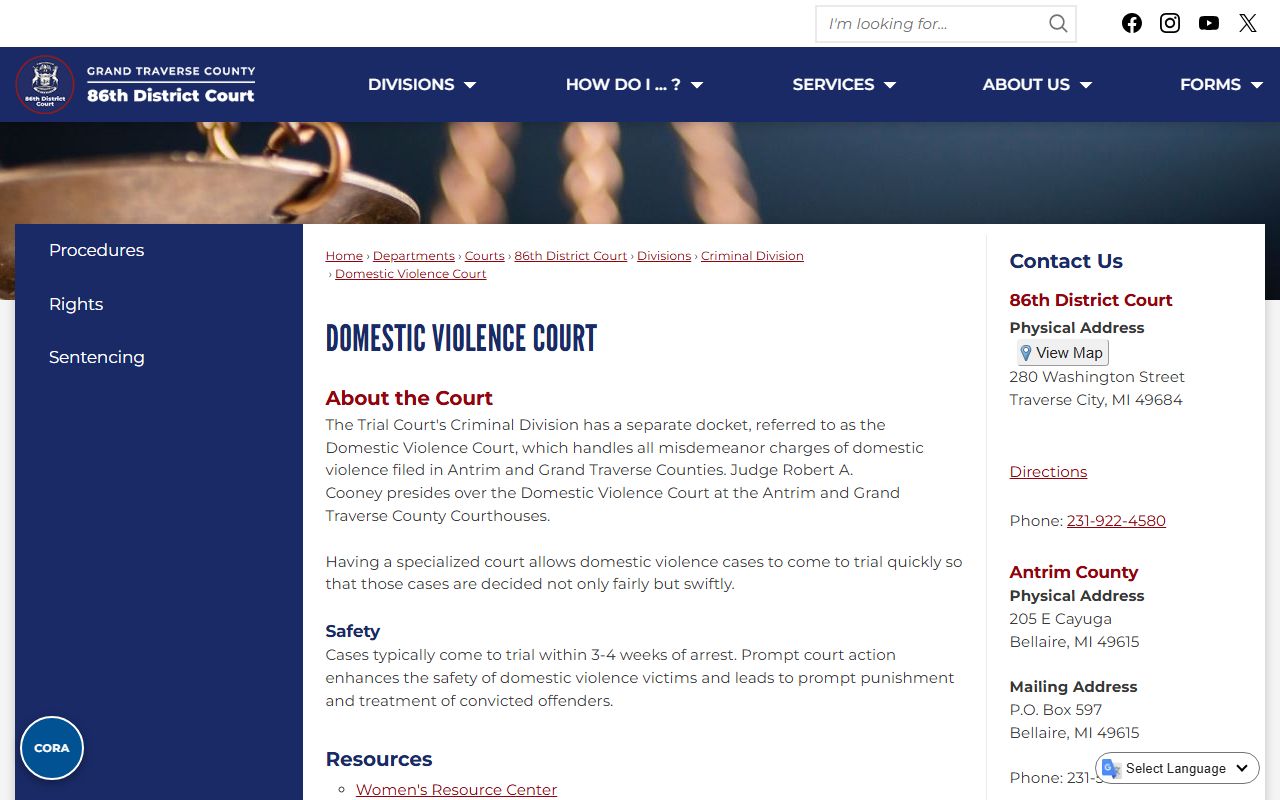
Probation officers who specialize in domestic-violence cases work closely with offenders on this docket, which keeps supervision and court review tied together. The broader program page adds context on how the fast-track model is meant to protect families.
The county's Domestic Violence program page explains the fast-track approach in more detail.
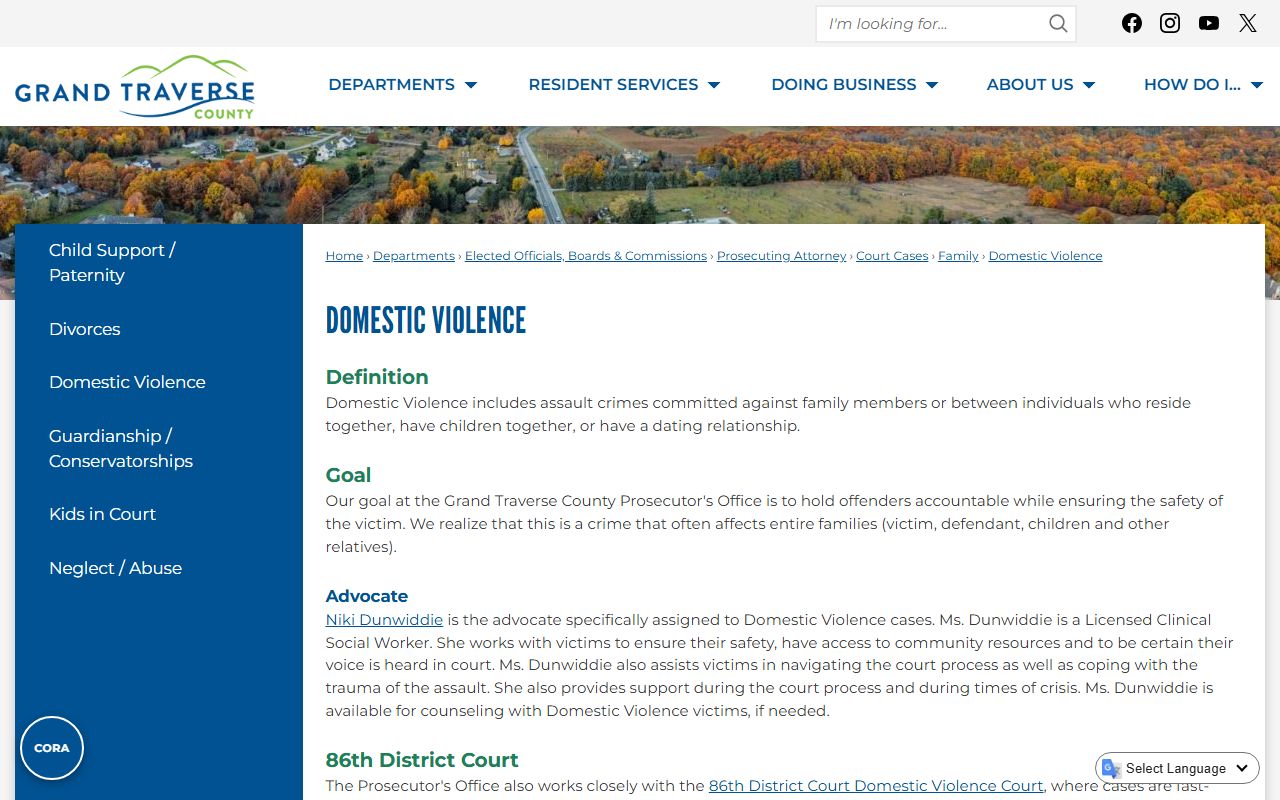
The charges, pleas, and sentences behind these specialty dockets appear in the full Antrim County criminal court records, where the offense and disposition sit alongside the proceedings log. The docket shows the path, and the case file shows the result.
Note: Specialty dockets add review hearings a standard case never has, so their docket lists tend to run longer than a routine misdemeanor.